In This Article
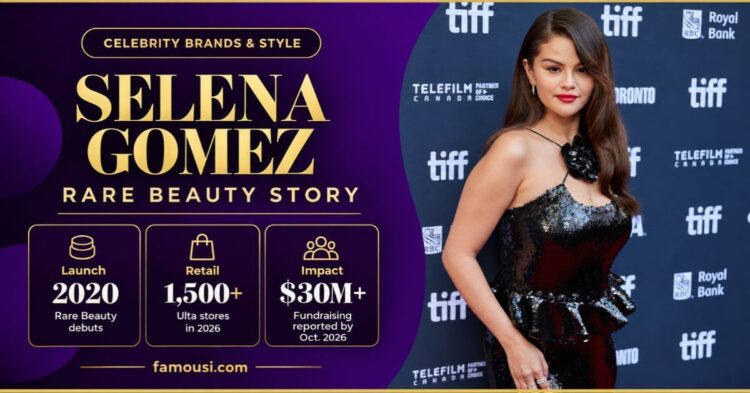
Selena Gomez launched Rare Beauty on September 3, 2020, with an idea that challenged a familiar message in the cosmetics industry: makeup should be something people enjoy, not something they need to feel beautiful.
Six years later, the singer and actress had developed a beauty business with a larger retail presence, an expanding fragrance portfolio, and a philanthropic initiative dedicated to improving access to youth mental health support.
The Selena Gomez Rare Beauty story is not simply about a celebrity attaching her name to makeup. It is about how a recognizable public figure established a distinct brand identity, translated it into products, and maintained a connection between commercial growth and a broader social mission.
Selena Gomez and Rare Beauty: Key Milestones
| Year | Milestone | Why It Matters |
|---|---|---|
| 2020 | Rare Beauty launches on September 3 through Sephora and RareBeauty.com in the United States, Canada, and Mexico. | Gomez introduces her beauty philosophy through a consumer cosmetics business. |
| 2020 | The Rare Impact Fund is established with a $100 million fundraising goal. | Youth mental health support becomes a formal part of the brand’s broader mission. |
| 2022 | Gomez participates in a White House conversation on youth mental health. | Her public advocacy extends beyond beauty products and brand campaigns. |
| February 2026 | Rare Beauty expands into more than 1,500 Ulta Beauty stores across the United States and Ulta.com. | A new major retail channel broadens the brand’s potential customer reach. |
| October 2026 | The Rare Impact Fund reports more than $30 million raised since its establishment. | The fund demonstrates fundraising progress toward its stated goal. |
The milestones reveal two connected but distinct developments: the expansion of Rare Beauty as a commercial business and the growth of Gomez’s philanthropic work. Understanding the difference is essential to understanding her entrepreneurial journey.
Why Selena Gomez Started Rare Beauty
Selena Gomez’s relationship with cosmetics began long before she became a beauty entrepreneur.
As an actress and musician, she spent years working with makeup artists and encountering the expectations surrounding appearance in entertainment. According to Rare Beauty’s original launch announcement, Gomez spent approximately two years developing the brand before its September 2020 debut.
Her goal was not to reject makeup. Instead, she wanted to change the way beauty products were presented and experienced.
The brand’s philosophy emphasized individual expression rather than the pursuit of an idealized appearance. On the official Rare Beauty About page, Gomez describes her ambition to create something that could make an impact beyond the beauty industry.
This gave Rare Beauty a recognizable message from the beginning.
The distinction matters because a celebrity’s public recognition can introduce consumers to a brand, but recognition alone does not establish what the brand stands for.
Gomez connected her personal creative identity to a specific proposition: people should feel free to use makeup without believing they must change who they are.
That positioning became the foundation for Rare Beauty’s products, communication, and community-building efforts.
The 2020 Launch Turned Her Vision Into Products
Rare Beauty officially debuted on September 3, 2020.
Its original collection included complexion makeup, blush, lip products, eye makeup, and application tools. The launch assortment included 48 foundation shades and 48 concealer shades, reflecting the company’s stated intention to serve a broad range of skin tones.
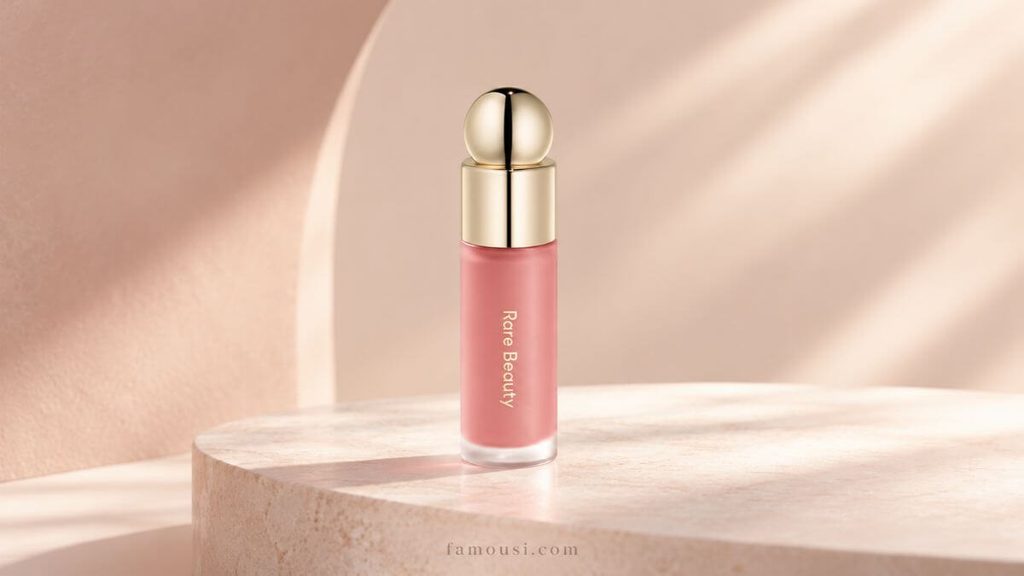
The initial release also featured products such as Soft Pinch Liquid Blush and Positive Light Liquid Luminizer.
According to the August 2020 Rare Beauty launch announcement, the brand introduced 14 product categories and approximately 150 individual product variants.
That was a substantial opening assortment rather than a launch centered on a single celebrity-branded item.
It allowed Rare Beauty to communicate its positioning through products serving different makeup preferences and routines.
Why the original product strategy mattered
The company’s initial emphasis on flexible coverage, varied shades, and everyday self-expression reflected its stated brand philosophy.
For consumers, however, a mission statement and a product’s actual performance are different things. Claims about inclusivity, accessibility, or satisfaction should be assessed against the products, shade availability, individual needs, and independent experience rather than assumed from marketing language alone.
The commercial significance of Rare Beauty’s launch was that Gomez brought a coherent collection to market with a recognizable point of view.
Her public profile provided visibility. The brand still needed products, distribution, customer relationships, and reasons for consumers to return.
That difference separates launching a celebrity product from developing an ongoing consumer business.
How Selena Gomez Connected Beauty With Mental Health Advocacy
One of the most distinctive elements of Rare Beauty was the decision to connect its commercial activity to a philanthropic initiative from the beginning.
In 2020, Gomez established the Rare Impact Fund to support organizations working to increase access to youth mental health services and education.
The funding model includes a commitment to contribute 1% of Rare Beauty sales, alongside donations from individuals, foundations, corporate partners, and other supporters.
Importantly, this is a percentage of sales, not a claim that the company donates 1% of profits.
The fund has a stated goal of mobilizing $100 million for its mission.
The Rare Impact Fund’s official explanation outlines how it works with nonprofit partners and directs philanthropic support toward youth mental health initiatives.
From a public message to an ongoing commitment
Gomez has also participated in public conversations about mental health beyond the company’s advertising.
On May 18, 2022, she joined a White House conversation on youth mental health alongside public officials and young advocates.
Her involvement was documented by the National Alliance on Mental Illness, which participated in the event.
The appearance was a public advocacy activity, not a Rare Beauty product launch or proof of a particular medical outcome.
Its relevance to the company’s story lies in the consistency between Gomez’s publicly stated priorities and the mission associated with Rare Beauty.
What had the fund achieved by 2026?
By October 2026, the Rare Impact Fund reported raising more than $30 million since its establishment.
It continued working toward its $100 million fundraising goal.
These figures describe philanthropic fundraising, not the cosmetics company’s revenue, profitability, valuation, or Selena Gomez’s personal wealth.
The fund also hosted its fourth annual benefit in Los Angeles on October 14, 2026, bringing together supporters of youth mental health initiatives.
The fundraising commitment is an important part of the Rare Beauty story, but its impact should be evaluated through documented grants, nonprofit partnerships, and reported outcomes—not simply the visibility of celebrity events.
The 2026 Ulta Beauty Expansion Marked a Business Turning Point
A major development in Rare Beauty’s commercial story came in early 2026.
On January 5, the company announced that it would expand into more than 1,500 Ulta Beauty stores across the United States, as well as Ulta.com, beginning February 1.
The move represented the brand’s first major retail expansion since its original 2020 launch.
The official Ulta Beauty expansion announcement also outlined a charitable giving partnership involving the Rare Impact Fund and the Ulta Beauty Charitable Foundation.
For Gomez, the expansion mattered for more than the number of retail locations.
Why a second major beauty retailer matters
Beauty retail is not solely about making products available. Stores provide opportunities for customers to discover brands, compare shades, examine packaging, and encounter products they might not have searched for online.
The Ulta launch placed Rare Beauty in another established U.S. beauty-shopping environment.
It also created a fresh opportunity for the company to introduce its products and mission to consumers through a different retail network.
This does not establish that all store locations produced equal sales, that Rare Beauty owned those stores, or that the expansion guaranteed future growth.
It does, however, document a meaningful change in distribution.
By 2026, Gomez’s beauty company was no longer operating only within the original retail arrangement that supported its launch.
The brand had gained a broader platform for competing in the U.S. beauty market.
Rare Beauty Expanded Beyond Its Original Makeup Collection
Retail expansion was not the only development in 2026.
Rare Beauty also continued broadening its product portfolio.
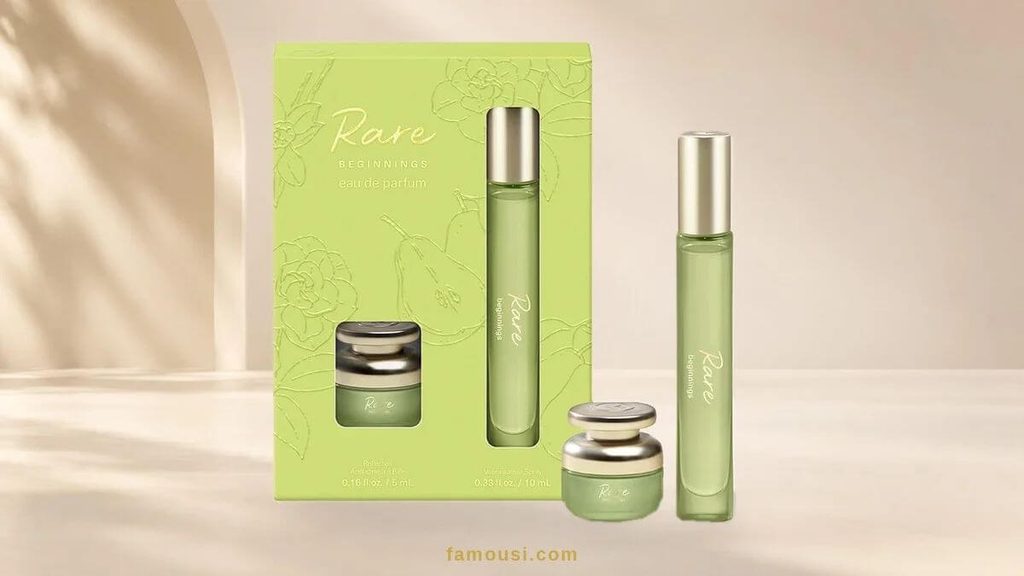
In August 2026, the company introduced Rare Beginnings Eau de Parfum, following its earlier Rare Eau de Parfum launch in 2025.
The new fragrance was accompanied by layering balms intended to offer different scent combinations.
As explained in ABC News’ coverage of Rare Beginnings, the fragrance expansion reflected another creative category for Gomez and the brand.
Fragrance involves different consumer preferences, product development considerations, and purchasing behaviors from complexion cosmetics.
That makes it an important part of Rare Beauty’s evolution.
Rather than depending entirely on the original makeup assortment, the company was developing additional ways for consumers to engage with its brand identity.
Still, a new product category is not proof of commercial success by itself. Long-term performance depends on demand, repeat purchases, competitive positioning, and operational execution.
The documented significance is the widening of the brand’s product offering.
How Much of Rare Beauty’s Success Comes From Selena Gomez?
Selena Gomez’s fame gave Rare Beauty a level of public visibility that a newly established cosmetics company might otherwise have needed years to build.
Her existing audience was a meaningful potential advantage in introducing the brand.
But attributing the business’s development entirely to celebrity recognition would overlook other factors.
Rare Beauty entered the market with a substantial opening collection, a clear brand message, an established retail relationship, and a publicly defined philanthropic commitment.
It subsequently expanded its distribution and developed new product categories.
These decisions provide a more complete explanation of the company’s development than social media popularity alone.
They also introduce a distinction worth preserving: Gomez’s role as founder and public face of Rare Beauty is documented, but the brand’s total revenue, valuation, ownership structure, and her personal net worth are separate financial questions.
Estimates of any one of those figures should not automatically be used as evidence for the others.
The more reliable measure of her entrepreneurial development is the progression from establishing an identity to operating and expanding a consumer business.
What Makes Selena Gomez’s Entrepreneurial Story Different?
Many entertainment personalities collaborate with established companies through advertising campaigns, licensing arrangements, or product endorsements.
Selena Gomez’s Rare Beauty involvement is different in its documented founder role and continuing connection to the brand’s identity.
Three aspects distinguish the story.
First, the purpose preceded the product launch. The company’s original communication established a specific perspective on beauty rather than simply relying on Gomez’s celebrity status.
Second, the business developed beyond its opening assortment. The move into Ulta Beauty and the expansion into fragrance demonstrate changes in distribution and product strategy over time.
Third, the philanthropic commitment has a defined mechanism. The Rare Impact Fund receives support connected to sales as well as other fundraising activity, providing a structure beyond occasional promotional statements about social causes.
These qualities do not make the company immune to the usual risks facing beauty brands, including competition, changing consumer preferences, product quality expectations, and the challenges of sustained growth.
They do explain why Gomez’s business journey deserves to be examined as more than a celebrity endorsement story.
For another perspective on the move from public recognition into beauty entrepreneurship, Famousi also explores Joelle Mardinian’s journey as a beauty entrepreneur and brand founder.
Frequently Asked Questions
1. Why did Selena Gomez start Rare Beauty?
Selena Gomez founded Rare Beauty to create makeup that encourages self-expression and challenges unrealistic standards of physical perfection. According to the company’s official mission, she wanted consumers to enjoy beauty products without feeling pressured to change what makes them unique. Rare Beauty launched with this positioning in 2020 and connected its broader mission to youth mental health advocacy.
2. When did Selena Gomez launch Rare Beauty?
Selena Gomez officially launched Rare Beauty on September 3, 2020. The initial product collection was introduced in the United States, Canada, and Mexico through Sephora and RareBeauty.com. It included foundation, concealer, blush, lip products, eye makeup, and other cosmetics. The brand subsequently expanded its product offering and distribution.
3. How did Rare Beauty expand in 2026?
Rare Beauty expanded into more than 1,500 Ulta Beauty stores across the United States and Ulta.com beginning February 1, 2026. The expansion introduced another major retail channel for the brand. Rare Beauty also developed its fragrance portfolio, launching Rare Beginnings Eau de Parfum in August 2026. These developments broadened its distribution and product range.
4. What is the connection between Rare Beauty and the Rare Impact Fund?
The Rare Impact Fund was established by Selena Gomez in 2020 as part of the broader social impact mission associated with Rare Beauty. One percent of Rare Beauty sales contributes to the fund, alongside support from individuals, foundations, and corporate partners. Its purpose is to support organizations working to improve access to youth mental health services and education.
5. Has Selena Gomez’s Rare Impact Fund reached its $100 million goal?
No completion of the $100 million fundraising goal had been verified as of October 22, 2026. The Rare Impact Fund reported raising more than $30 million since its establishment in 2020 and continued working toward its stated target. The reported amount represents philanthropic funds raised, not the revenue or market valuation of Rare Beauty.
Why Selena Gomez’s Rare Beauty Story Matters
Selena Gomez’s development as a beauty entrepreneur illustrates how a celebrity-founded business can become more than a short-lived product launch when its original idea is supported by commercial decisions over time.
Rare Beauty’s journey from its 2020 debut to its 2026 retail and fragrance expansion shows a company developing new ways to reach consumers while maintaining a publicly defined identity.
Its longer-term success cannot be established from celebrity popularity or headline valuations alone. What makes the story significant is the visible progression from a founder’s stated vision into products, distribution, and an ongoing philanthropic commitment.
That is the business story behind Selena Gomez’s Rare Beauty.