In This Article
Chanel brand history is more revealing when it is read as a system of reinvention rather than a list of famous products.
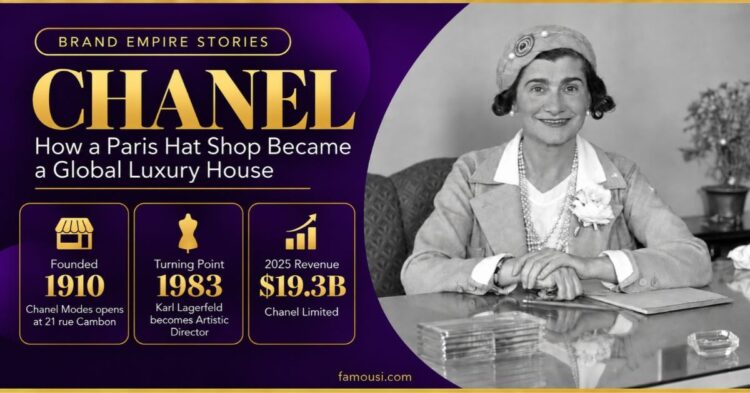
Gabrielle Chanel opened Chanel Modes at 21 rue Cambon in Paris in 1910. From that millinery business came resort clothing, couture, fragrance, handbags, footwear and a design language that could be reinterpreted long after its founder’s lifetime. More than a century later, the House is still working with recognizable ideas inherited from that history while entering a new fashion era under Matthieu Blazy.
The important part of the story is not simply that Chanel created enduring icons. It is that the House repeatedly turned practical ideas—freedom of movement, simplicity, recognizable materials and useful accessories—into codes that could move between generations and product categories.
The Turning Points That Built Modern Chanel
| Year / period | Verified Chanel milestone | What changed | Why it matters to the Chanel story |
|---|---|---|---|
| 1910 | Gabrielle Chanel opens Chanel Modes at 21 rue Cambon in Paris. | Millinery becomes the commercial starting point of the House. | Establishes the founder, place and independent identity behind the brand. |
| 1918 | Chanel establishes her couture house at 31 rue Cambon. | Boutique, ateliers and creative activity are concentrated at an address that remains central to Chanel history. | Gives the House a physical center that becomes part of its identity. |
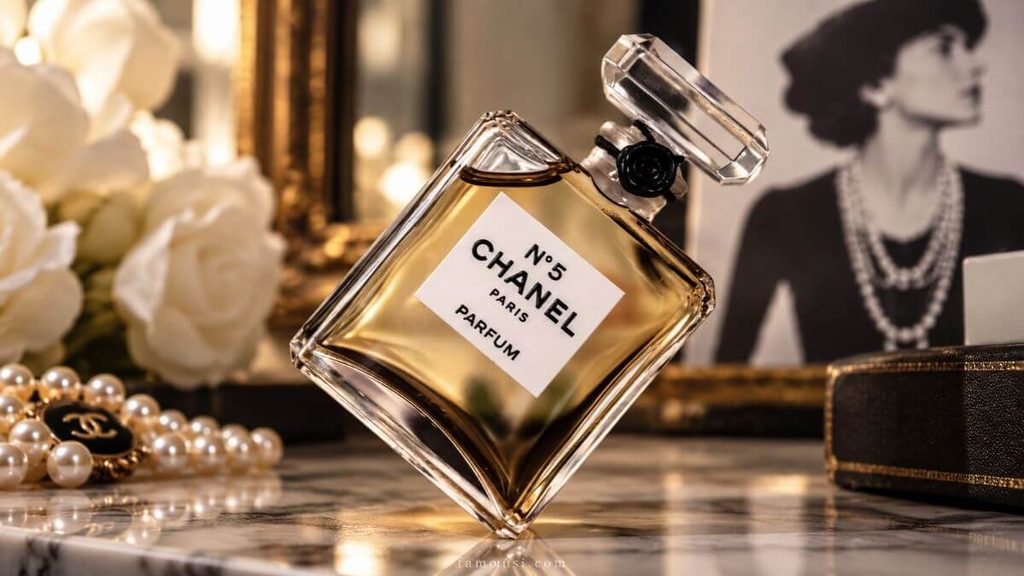
| 1921–1924 | N°5 launches in 1921; Société des Parfums CHANEL is created in 1924 to produce and sell fragrances and cosmetics. | Chanel expands beyond clothing into beauty. | Shows that the name could travel into a different luxury category without becoming a separate story. |
| 1939–1954 | Chanel closes her salon in 1939 and reopens the couture house in 1954. | A long interruption is followed by a deliberate return to fashion. | Tests whether the House’s design principles can remain relevant after a major break. |
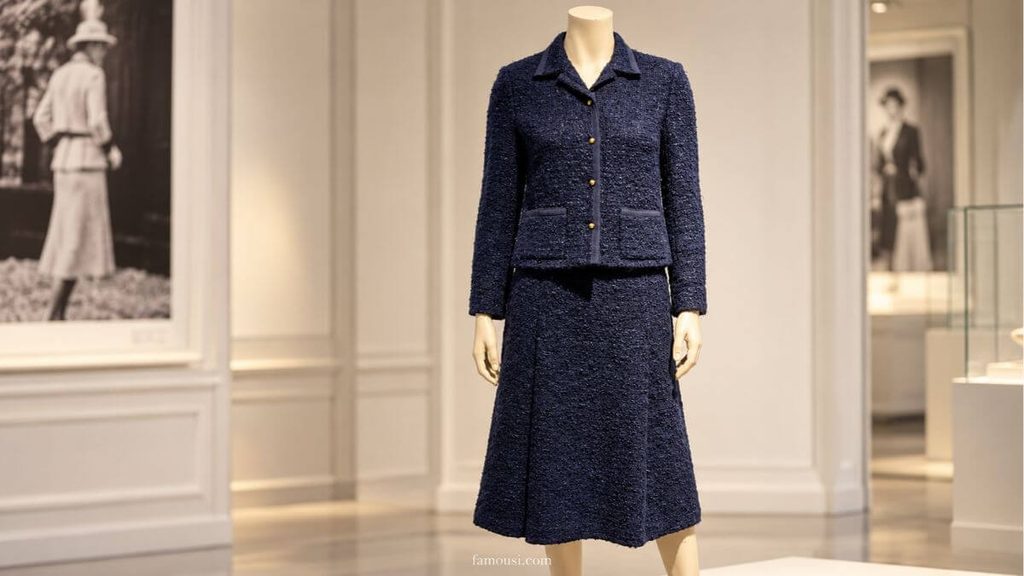
| 1955–1957 | The 2.55 handbag, trimmed tweed suit and two-tone pumps become key postwar creations. | Practicality is translated into highly recognizable products. | Turns functional design choices into repeatable Chanel signatures. |
| 1983 | Karl Lagerfeld becomes Artistic Director of Chanel. | A new creative leader begins reworking an established heritage rather than starting from zero. | Demonstrates how Chanel codes could be renewed by another generation. |
| 1985–2002 | Chanel acquires specialist craft houses including Desrues, Lesage and Massaro; the first Métiers d’art collection appears in 2002. | Craft expertise becomes increasingly embedded in the House’s creative ecosystem. | Makes savoir-faire part of the infrastructure supporting the brand, not only part of its mythology. |
| 2025–2026 | Chanel reports $19.3 billion in 2025 revenue as Matthieu Blazy leads its current fashion chapter. | A historic House operates at global scale while changing creative leadership again. | Brings the same continuity-versus-renewal question into the present. |
Chanel began with freedom of movement, not with a luxury formula
Gabrielle Chanel’s first hat boutique opened in 1910. She followed with Deauville, where Chanel’s official history says she began selling jersey sportswear from 1913, and with a couture house in Biarritz in 1915. By 1918, 31 rue Cambon had become the center of her couture business. CHANEL’s account of Gabrielle Chanel and the early House
Those dates matter, but the more important connection is what the clothes were trying to do.
The Victoria and Albert Museum describes comfort, simplicity and wearability as consistent principles in Gabrielle Chanel’s work. Jersey—then strongly associated with utilitarian uses—gave her a fluid material suited to a less restrictive wardrobe. The V&A’s analysis of Chanel’s enduring design signatures
That created a powerful foundation for a brand. Chanel did not need every future product to look identical. It needed new products to feel compatible with the same underlying logic.
Freedom, practicality and controlled simplicity could appear in clothing, a handbag or a pair of shoes without each object having to repeat the previous one literally.
N°5 showed that Chanel could become bigger than clothing
The 1921 launch of Chanel N°5 was an early test of whether the House’s identity could travel into another category.
CHANEL describes N°5 as its first perfume, created through Gabrielle Chanel’s work with perfumer Ernest Beaux. Three years later, Société des Parfums CHANEL was established to produce and sell fragrances and cosmetics, and the House introduced its first makeup collections. CHANEL’s official 1920s history
That sequence is more significant than the fame of one fragrance.
A fashion name had become capable of organizing a broader luxury world around itself. Fragrance did not require Chanel to abandon couture; it gave the House another medium through which recognizable ideas about presentation, identity and modernity could operate.
This is one of the clearest turning points in Chanel brand history because it established a pattern the House would keep using: expand the universe without making the original identity irrelevant.
The 1954 comeback turned old principles into new signatures
Chanel’s history was not a smooth upward line.
The Metropolitan Museum of Art records that Chanel closed her salon in 1939. In 1954, at age 71, Gabrielle Chanel reopened her couture house.
What followed helps explain why the comeback became so important to the brand’s later identity.
In 1955 came the 2.55 handbag, named for its February 1955 creation date. Chanel’s official history emphasizes the practical benefit of its sliding chain: it allowed the wearer’s hands to remain free. The V&A likewise describes the 2.55 as a combination of recognizable design codes and practical features. CHANEL’s record of the 1950s comeback and the 2.55
The trimmed tweed suit followed in 1956, and Chanel introduced the two-tone pumps in 1957. The V&A notes that the postwar Chanel suit remained tied to comfort and freedom of movement, with supple construction rather than rigid tailoring.
These products became icons, but treating them only as famous objects misses the more useful pattern.
The chain bag, supple suit and practical shoe all translated the same broad proposition into different forms: elegance should work with the body rather than fight it. That shared logic helped individual designs become parts of a recognizable system.
Karl Lagerfeld proved the codes could belong to a new creative era
A heritage brand eventually faces a difficult question: whether its identity can survive when its founder is no longer the person defining it.
For Chanel, Karl Lagerfeld’s arrival in 1983 became one of the most important tests.
Chanel’s archive says Lagerfeld was named Artistic Director that year and credits his era with renewing Cruise collections, restoring Haute Couture, developing pre-collections and shaping Chanel ready-to-wear as it is known today. CHANEL’s official record of Karl Lagerfeld’s 1983 arrival
The important distinction is that Lagerfeld did not need to erase Chanel’s heritage to make his own work visible. The existing vocabulary—tweed, quilting, chains, camellias, black and white, costume jewelry and other recognizable references—could be exaggerated, reframed or recombined.
That made Chanel’s heritage usable rather than static.
Lagerfeld’s long relationship with another major fashion house also makes Famousi’s history of Fendi and its century of creative change a useful parallel: the two stories are different, but both show how a luxury house can preserve recognition while giving later creative leaders meaningful room to work.
Chanel turned craftsmanship into part of the operating system
Another part of the Chanel story receives less attention than handbags or perfume but may be just as important to understanding the modern House.
In 1985, Chanel acquired the button-maker Desrues. In 2002, Paraffection acquired the shoemaker Massaro and embroidery house Lesage, adding them to other specialist craft houses already connected to the company. That same year, Karl Lagerfeld launched Chanel’s first Métiers d’art collection. CHANEL’s official history of its Métiers d’art expansion
This created a different kind of continuity.
Instead of protecting heritage only through archives and visual references, Chanel was also investing in the people and specialist capabilities required to keep elaborate fashion production possible.
That does not mean acquisitions alone explain Chanel’s success. It means the House built a structure in which craftsmanship could remain an active production resource while its visual language continued changing.
The distinction matters. Heritage is easier to imitate at the surface than the ecosystem needed to reproduce complex skills over time.
Chanel in 2026 combines enormous scale with another creative transition
The House now operates on a scale that would have been difficult to imagine from the original millinery shop.
Chanel Limited reported $19.3 billion in revenue for 2025, up 2% on the comparable constant-exchange-rate basis used in its release. The company also reported $2.395 billion of investment in 2025 to support brand activities, alongside continued investment in its creative ecosystem, retail network and client experience. CHANEL Limited’s 2025 financial results
Those figures establish scale; they do not, by themselves, explain why customers value Chanel.
The more interesting question is how a company of that size keeps its history usable.
That challenge now belongs in part to Matthieu Blazy, Chanel’s Artistic Director of Fashion Activities, responsible for Haute Couture, Ready-to-Wear and Accessories. Chanel announced his appointment for 2025, and its 2025 financial results describe his Spring-Summer 2026 debut as the opening of another creative chapter. CHANEL’s Matthieu Blazy appointment announcement
His role makes the current era another test of the system Chanel has used before: new creative authorship must be visible, but the House still needs to remain recognizable as Chanel.
Why Chanel’s brand history still matters
The strongest explanation of Chanel’s longevity is not that the House discovered one perfect product and protected it forever.
Its history shows something more adaptable.
Gabrielle Chanel established practical principles that could generate recognizable forms. N°5 proved the identity could cross categories. The postwar comeback turned functionality into durable signatures. Lagerfeld demonstrated that another designer could transform those signatures without making them unrecognizable. Investments in specialist craft houses helped keep the production knowledge behind luxury creation inside Chanel’s wider ecosystem.
The result is a brand whose heritage works more like a vocabulary than a museum display.
That pattern also appears, in a different form, in Famousi’s Bulgari brand history and its evolution from a Rome silver shop into a global luxury house: lasting luxury identities tend to remain strongest when their history provides material that later generations can reinterpret rather than merely preserve.
For Chanel, the next test is already underway. The scale is modern, the creative leadership has changed again, and the House is still drawing on ideas that began with a much smaller business in Paris.
Frequently Asked Questions
When was Chanel founded?
Chanel is generally dated to 1910, when Gabrielle Chanel opened her independent millinery boutique, Chanel Modes, at 21 rue Cambon in Paris. An older Chanel corporate history also records a precursor shop at 160 boulevard Malesherbes in 1909, so 1909 is useful as an earlier business milestone while 1910 remains the House’s standard founding point.
Why is Chanel N°5 important in Chanel’s history?
Chanel N°5 is important because its 1921 launch showed that the Chanel name could extend beyond fashion. In 1924, Société des Parfums CHANEL was created to produce and sell fragrances and cosmetics, making beauty a documented part of the House’s expansion rather than simply a later licensing story.
What does Chanel 2.55 mean?
The name 2.55 refers to the handbag’s creation in February 1955. Gabrielle Chanel designed the quilted bag with a sliding chain that allowed it to be worn while keeping the hands free, combining practicality with details that later became closely associated with Chanel.
What did Karl Lagerfeld change at Chanel?
Karl Lagerfeld became Chanel’s Artistic Director in 1983. Chanel credits his era with revitalizing Cruise, restoring Haute Couture, introducing or developing collections including Métiers d’art and pre-collections, and shaping the House’s modern ready-to-wear identity. His larger contribution was to demonstrate that Chanel’s historic codes could be repeatedly reinterpreted by a new creative leader.
Who designs Chanel now, and how large is the company?
Matthieu Blazy is Chanel’s Artistic Director of Fashion Activities, responsible for Haute Couture, Ready-to-Wear and Accessories. Chanel Limited reported $19.3 billion in revenue for 2025. Those figures describe company scale, while Blazy’s appointment marks the House’s current creative chapter.
Chanel’s next chapter depends on making history usable
Chanel’s past gives the House an unusually deep archive of products, materials, places and creative codes. But history alone cannot guarantee future relevance.
What the brand has repeatedly done is more difficult: allow those codes to change function without losing recognition.
From jersey and 31 rue Cambon to N°5, the 2.55, Métiers d’art and the Blazy era, the durable thread is not one object. It is the ability to make continuity and change work together.
That is what turned a Paris hat shop into a luxury house capable of carrying more than a century of history into another creative generation.