In This Article
Valentino’s history is not simply the story of a famous designer building a luxury label. It is a story of how a Roman couture house learned to survive major changes in creative leadership, ownership and scale without losing the codes that made it recognizable.
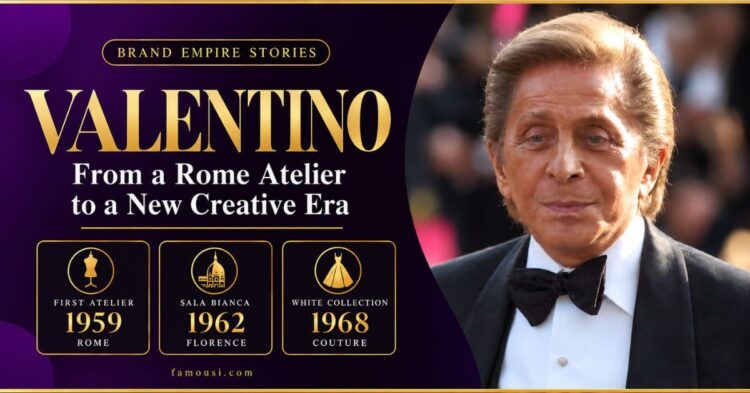
The foundation was unusually clear. Valentino Garavani supplied the creative vision; Giancarlo Giammetti brought the strategic discipline that helped turn that vision into a business. From a first Rome atelier in 1959, the Maison moved rapidly onto the international couture stage, expanded beyond Italy and eventually learned how to continue after its founder stepped away.
That ability to combine continuity with change is the most useful way to read Valentino today. The company is no longer founder-led, its ownership has evolved, and Alessandro Michele now directs its creative identity. Yet Rome, couture, color and a highly controlled sense of glamour still connect the current Maison to its beginnings.
Valentino’s most important turning points
| Year / period | What changed at Valentino | Why it matters |
|---|---|---|
| 1959 | Valentino Garavani opened his first atelier on Via Condotti in Rome and debuted the Ibis Haute Couture collection. | It established the creative and geographic origin of the Maison. |
| 1960 | Maison Valentino was formally founded with Giancarlo Giammetti. | Garavani’s design vision was paired with Giammetti’s strategic approach. |
| 1962 | Valentino presented Haute Couture in the Sala Bianca at Palazzo Pitti in Florence. | Valentino describes the event as the point at which the designer received international acclaim. |
| 1968 | The White Collection appeared; Jacqueline Kennedy chose Valentino for her wedding to Aristotle Onassis; the first Paris boutique opened that year. | Couture visibility and international retail expansion began reinforcing each other. |
| 2007–2008 | Valentino celebrated its 45th anniversary and entered the transition beyond its founder; Garavani retired and his final runway show followed in early 2008. | The Maison had to prove that Valentino could exist beyond Valentino himself. |
| 2012 | Mayhoola acquired Valentino. | A new ownership era began while the Maison continued developing under successive creative directors. |
| 2023–2025 | Kering acquired 30% of Valentino; the later shareholder agreement kept the 70% Mayhoola / 30% Kering structure unchanged until at least 2028. | Valentino entered a strategic partnership with a major luxury group without becoming fully owned by it. |
| 2024–2025 | Alessandro Michele became Creative Director, followed by Riccardo Bellini as CEO. | The Maison entered its current creative and executive chapter. |
The early milestones come from Valentino’s official Maison history, while the current ownership structure is documented by Kering’s Valentino shareholder agreement update.
Valentino began with two different kinds of talent
The first important distinction in Valentino history is the difference between opening an atelier and formally establishing the Maison.
Garavani opened his Via Condotti atelier in Rome in 1959 and presented the Ibis Haute Couture collection that same year. In 1960, Maison Valentino was formally founded with Giancarlo Giammetti, whom Valentino’s own history describes as bringing a strategic approach alongside Garavani’s creative talent.
That partnership matters because it explains something that a founder-only story misses. Valentino was built around both aesthetic authorship and business organization. Garavani could develop the image of the house while Giammetti helped create the structure that allowed it to travel.
Rome was equally important. Valentino was never simply an Italian brand in the abstract; its early identity was embedded in the city. Famousi’s Fendi history offers an interesting parallel: another luxury house began in Rome and later had to preserve its sense of place while ownership, leadership and creative direction changed around it.
The Sala Bianca moment moved Valentino beyond Rome
Only two years after the formal founding, Valentino reached a decisive international stage.
In 1962, Garavani was invited to present his Haute Couture collection in the Sala Bianca at Palazzo Pitti in Florence. Valentino’s own historical record describes the presentation as the moment when he received international acclaim.
The distinction is important. A fashion house can exist before it possesses international recognition. The Sala Bianca presentation did not create Valentino’s aesthetic, but it gave that aesthetic a larger platform.
That is why 1962 works better as a turning point than as just another date on a timeline. It changed the audience for the Maison.
1968 connected couture visibility with international expansion
If 1962 widened Valentino’s reputation, 1968 showed how that reputation could become a broader luxury business.
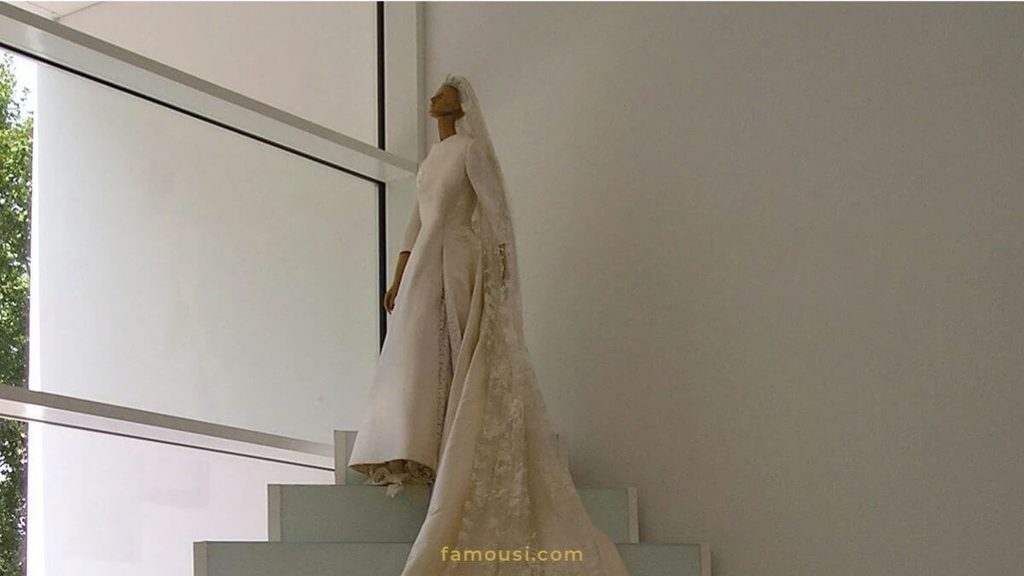
In January, Valentino presented the collection later known as the White Collection. That year Jacqueline Kennedy selected a Valentino dress for her wedding to Aristotle Onassis. Valentino’s archive says the Maison subsequently received 60 orders for identical dresses.
The significance goes beyond celebrity dressing. In May 1968, Valentino also opened its first Paris boutique at 42 Avenue Montaigne. Stores followed in Milan, Rome, New York, London and Tokyo over the subsequent years.
These were different kinds of growth, but they supported the same transition. Couture created desire and recognition; physical expansion gave the Maison more places in which that identity could operate.
The White Collection also demonstrated that Valentino did not need to rely on one visual formula. The house would become inseparable from red, yet one of its defining early moments was built around white.
Valentino Red became a code, not simply a color
Valentino’s relationship with red is one of the rare fashion stories in which a color became closely identified with a house and its founder.
Valentino Beauty’s archive presents the origin as part of the Maison’s own heritage narrative: a young Valentino Garavani noticed a woman in a red velvet dress at the opera in Barcelona, and the memory stayed with him. The brand connects that story to the Fiesta red dress shown in 1959 and describes Rosso as a recurring signature across Valentino collections.
That account should be understood as Valentino’s own history of the color rather than independent proof of every legend that has accumulated around “Valentino Red.”
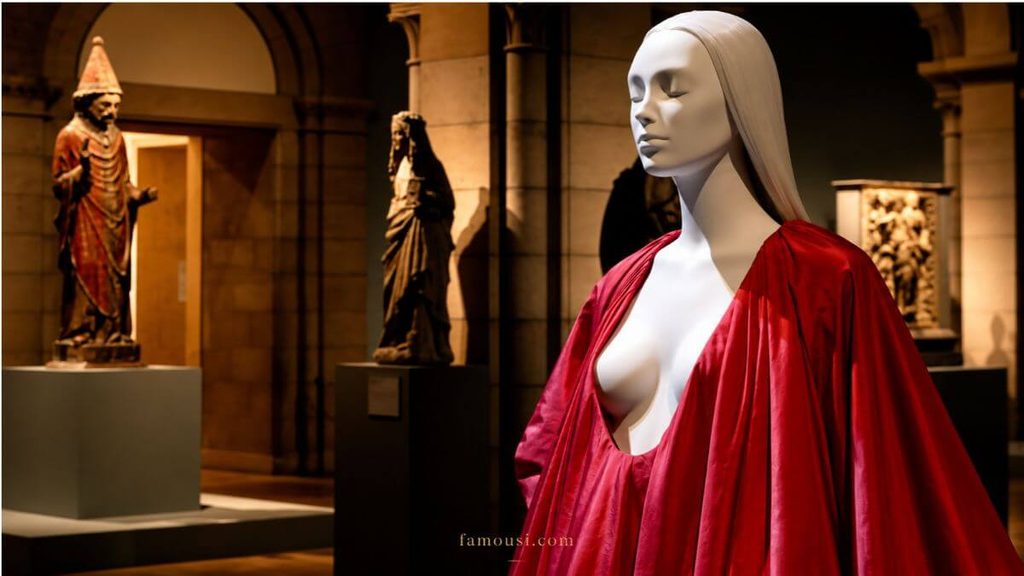
What is more defensible is the larger point: red became a recognizable design code capable of carrying Valentino’s identity across decades, even while silhouettes, designers and business structures changed.
That kind of continuity is powerful because it does not require every collection to look the same. A durable brand code gives new creative directors something to respond to rather than a template they must simply repeat.
The hardest transition was creating Valentino without its founder
The decisive long-term test arrived in 2007 and 2008.
Valentino marked its 45th anniversary in Rome with an exhibition at the Ara Pacis Museum featuring more than 350 creations and archival pieces. The Maison’s current history dates Garavani’s retirement to September 2007; his final runway show followed in Paris in January 2008.
The chronology matters less than what followed.
Maria Grazia Chiuri and Pierpaolo Piccioli were appointed co-Creative Directors in 2008. Piccioli later became sole Creative Director in 2016. In other words, Valentino did not try to solve succession by pretending its founder was still creatively present. It created a new leadership structure and allowed subsequent designers to interpret the house through their own periods.
This problem is not unique to Valentino. Famousi’s Alexander McQueen history explores another fashion house that had to preserve a recognizable creative language after the founder was no longer directing the brand.
What distinguishes Valentino is how long that post-founder evolution has already lasted. The Maison has now experienced several creative eras without abandoning the idea that couture remains central to its identity.
Mayhoola changed the ownership chapter in 2012
Creative succession was followed by another important structural change.
In July 2012, Qatari investment vehicle Mayhoola acquired Valentino.
Ownership, however, should not be confused with creative authorship. The company could change hands while designers continued shaping what consumers actually saw as Valentino.
That separation becomes especially important in the current era because Valentino now has several significant relationships that perform different functions.
L’Oréal, for example, does not own Maison Valentino. The companies signed a long-term worldwide licence in 2018 covering the creation, development and distribution of fine fragrances and luxury beauty under the Valentino brand, effective from January 2019. L’Oréal’s Valentino licensing announcement documents that relationship directly.
Calling a licence an ownership relationship would flatten an important distinction in how a modern luxury house expands.
Kering owns 30% of Valentino, not the entire Maison
Another relationship that needs precise language is Kering’s investment.
Kering acquired a 30% stake in Valentino in 2023 as part of a wider agreement with Mayhoola. In September 2025, the two shareholders amended their agreement so that Valentino’s ownership structure would remain unchanged until 2028 at the earliest. Mayhoola’s remaining 70% stake therefore continues to sit alongside Kering’s 30% interest as of October 4, 2026.
The agreement includes future put and call options, but those mechanisms should not be rewritten as a completed acquisition.
The difference is simple but important: Kering is a significant minority shareholder in Valentino; it does not currently own 100% of the company.
That distinction keeps the present-day story accurate and prevents a future possibility from being described as a fact that has already occurred.
Alessandro Michele opened the Maison’s current creative chapter
Valentino’s current creative era began on April 2, 2024, when Alessandro Michele became Creative Director with responsibility for men’s and women’s collections, accessories and Haute Couture.
Riccardo Bellini became CEO on September 1, 2025. Valentino’s own current history and its 2026 activity continue to identify Michele and Bellini in those roles.
Their appointments create another version of the pattern that has defined Valentino since the beginning: creative direction and business leadership remain distinct but interconnected.
The difference is that today they operate inside a much more complex structure. Mayhoola is the majority shareholder. Kering owns 30%. L’Oréal operates Valentino Beauty through a licence. Creative direction sits with Michele. Executive leadership sits with Bellini.
Those relationships are not competing explanations of who “controls Valentino.” They describe different layers of a modern luxury company.
Valentino Garavani’s death made the question of legacy more immediate
Valentino Garavani died in Rome on January 19, 2026, aged 93. The Maison responded by emphasizing the continuing importance of his creative, cultural and human legacy.
His death did not begin Valentino’s post-founder era; that transition had started almost two decades earlier.
It did, however, make the distance between founder and institution impossible to ignore. Valentino is now definitively a Maison carrying a founder’s name without the founder being present to interpret it.
That makes the current period a useful test of what the brand actually inherited. If Valentino’s identity depended only on one individual making every creative decision, succession would eventually erase it. If the identity was encoded more deeply—in couture standards, color, proportion, glamour, Rome and a culture of creative reinvention—then different designers can continue working inside the name without merely imitating its founder.
Frequently Asked Questions
Who founded Valentino?
Valentino was formally founded in Rome in 1960 by Valentino Garavani and Giancarlo Giammetti. Garavani provided the creative vision, while Valentino’s official history describes Giammetti as bringing a strategic approach to the partnership. Garavani had opened his first Via Condotti atelier one year earlier, in 1959.
When and where was Valentino founded?
Maison Valentino was formally founded in Rome in 1960. Valentino Garavani had already opened his first atelier on Via Condotti in Rome in 1959, so the two dates refer to different milestones: the first atelier and the formal founding of the Maison.
Who owns Valentino now?
As of October 4, 2026, Mayhoola owns 70% of Valentino and Kering owns 30%. A September 2025 amendment to their shareholder agreement states that this ownership structure will not change before 2028 at the earliest. Future contractual options exist, but Kering does not currently own all of Valentino.
Who is Valentino’s creative director and CEO?
Alessandro Michele is Valentino’s Creative Director. He took the role on April 2, 2024. Riccardo Bellini has been Chief Executive Officer since September 1, 2025. Valentino’s 2026 materials continue to identify both men in those positions.
Why is Valentino Red famous?
Valentino Red became one of the Maison’s most recognizable visual codes. Valentino’s own heritage narrative traces Garavani’s fascination with red to a woman in a red velvet dress he saw at the opera in Barcelona and connects that memory with the Fiesta red dress presented in 1959. The origin story is brand-reported, but red’s recurring role across Valentino’s couture history is central to the identity the Maison has built around Rosso.
Valentino’s history is a story of continuity through change
Valentino survived its most difficult transformation long before its current creative era began.
The house moved from a founder-led Roman atelier to an international couture name, from Garavani and Giammetti to successive creative directors, from founder-era ownership to Mayhoola and then a strategic minority investment from Kering. Along the way, beauty expanded through a licensing relationship with L’Oréal and creative leadership eventually reached Alessandro Michele.
Those transitions matter because Valentino did not preserve itself by freezing one moment in fashion history.
It preserved enough of its identity—Rome, couture, glamour, Rosso and a disciplined relationship between creativity and business—to give each new era something substantial to reinterpret.
That is the real strength of the Valentino story: not that the Maison avoided change, but that it repeatedly found ways to change without becoming unrecognizable.