In This Article
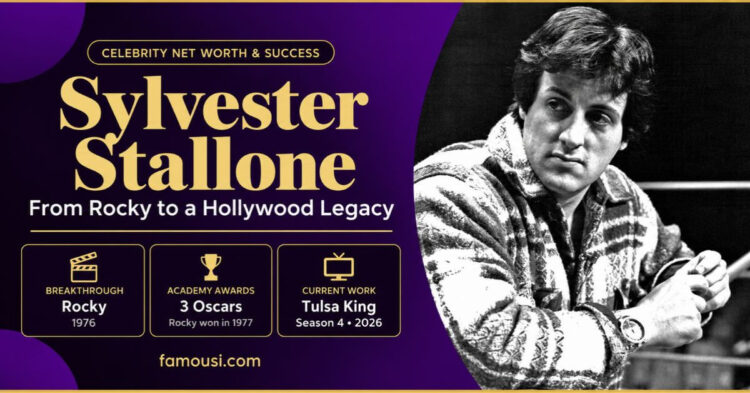
Sylvester Stallone became famous because he did something Hollywood was not giving him the opportunity to do: he wrote his own starring role. The struggling actor created Rocky, insisted on playing its unlikely hero, and watched the 1976 film become an Academy Award-winning success.
But Rocky was only the beginning.
Across five decades, Stallone transformed himself from an overlooked performer into a screenwriter, director, action star and television leading man. His career has included extraordinary breakthroughs, commercial disappointments and unexpected reinventions.
In 2026, as Rocky marks its 50th anniversary, Stallone’s story offers a revealing look at how a Hollywood career can survive beyond the character that first made it famous.
Sylvester Stallone’s Career: Major Turning Points
| Year | Career milestone | Why it matters |
|---|---|---|
| 1976 | Writes and stars in Rocky | Creates the role that transforms his career |
| 1982 | Stars in First Blood | Introduces John Rambo, another enduring screen character |
| 2010 | Writes, directs and stars in The Expendables | Brings together established action stars in a new franchise |
| 2015 | Returns as Rocky Balboa in Creed | Reinvents his most famous character as a mentor |
| 2022 | Begins starring in Tulsa King | Moves into a major scripted television leading role |
| 2026 | Tulsa King Season 4 and The Steps memoir | Continues acting while reflecting on the origins of his success |
These milestones show that Stallone’s career was not one uninterrupted rise. Its longevity came partly from finding new ways to use the characters, skills and reputation he had already developed.
Before Rocky: The Actor Hollywood Kept Rejecting
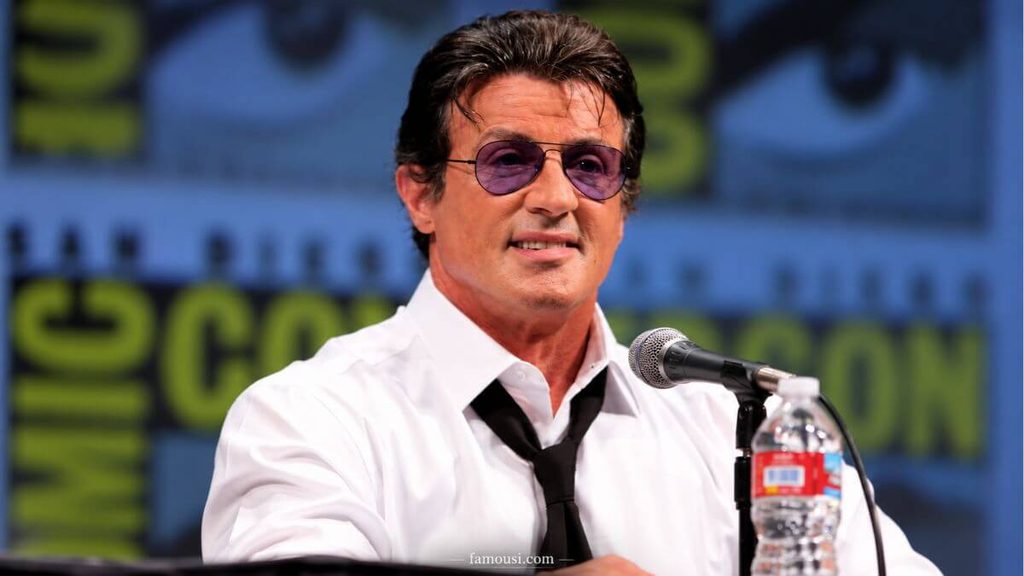
Long before audiences knew him as Rocky Balboa, Sylvester Stallone was struggling to establish himself as an actor.
Born in New York City in 1946, he studied acting and developed an interest in writing while pursuing a career in entertainment.
Opportunities were limited.
According to Stallone’s official biography, he spent years attending auditions in New York without securing the breakthrough he wanted. By the early 1970s, the repeated rejections had encouraged him to devote more attention to writing screenplays.
He appeared in The Lords of Flatbush in 1974, gaining an early significant screen credit. Yet the performance did not immediately establish him as a leading Hollywood star.
Stallone eventually moved to Los Angeles, continued auditioning and kept writing.
His financial difficulties became part of his public story. In his 2026 memoir, The Steps, he recounts experiences including sleeping on pizza boxes and cleaning lion cages at Central Park Zoo.
Those recollections are important not simply because they describe hardship, but because they help explain the circumstances in which he began creating opportunities for himself.
Instead of relying exclusively on casting directors to recognize his potential, Stallone developed a screenplay built around a character who was also struggling to be taken seriously.
That character was Rocky Balboa.
Rocky: The Film That Changed Everything
Released in 1976, Rocky follows a small-time Philadelphia boxer who receives an unlikely opportunity to fight heavyweight champion Apollo Creed.
The character is not presented as an unstoppable champion. Rocky is a man with limited prospects who discovers that being given a chance can matter as much as winning.
For Stallone, the story carried a personal connection.
He had written the screenplay during a period when his own acting prospects appeared uncertain. Producers became interested in the script, but according to his official biography, some wanted to cast an established actor in the leading role.
Stallone insisted on playing Rocky himself.
That decision mattered because the screenplay was more than a writing opportunity. It became his route to the acting career he wanted.
The finished film, directed by John G. Avildsen, was both a commercial and critical breakthrough.
At the 49th Academy Awards in March 1977, Rocky received nine nominations and won three Oscars: Best Picture, Best Director and Best Film Editing.
Stallone personally received nominations for Best Actor and Original Screenplay. He did not win either category, a distinction confirmed by the Academy’s official 1977 awards record.
The achievement was nevertheless remarkable. A performer who had struggled to secure major roles had written and starred in one of the year’s most celebrated films.
More importantly, he had created a character audiences would continue to recognize for generations.
From Rocky Balboa to John Rambo: Building an Action Career
Success with Rocky gave Stallone a level of visibility he had never previously enjoyed.
But sustaining a Hollywood career required something different from achieving one breakthrough.
The Rocky sequels allowed him to revisit the character while taking on greater creative responsibilities. Stallone wrote, directed and starred in several installments, helping shape the development of Rocky’s screen story.
Then came another defining role.
In 1982, Stallone played John Rambo in First Blood, portraying a Vietnam War veteran whose confrontation with local authorities escalates into violence.
Rambo offered a different image from Rocky Balboa.
Rocky was a working-class boxer seeking dignity and opportunity. Rambo was a psychologically scarred veteran whose combat skills made him formidable, even as the original film explored the consequences of war and alienation.
The differences between the two characters were significant.
Together, they established Stallone in two distinct film franchises that would become central to his public identity.
Over the following decades, the characters developed through sequels with changing tones, themes and creative teams.
Stallone’s involvement also extended beyond acting. He contributed screenplays and directed installments in both series.
That combination of performance and creative participation distinguished his career from one built entirely around accepting roles created by others.
Beyond the Action Hero: Experimenting With Different Roles
Stallone’s association with muscular action heroes brought commercial visibility, but it also created expectations.
Audiences knew what a Stallone movie was supposed to look like.
Throughout his career, he periodically challenged that image by appearing in other genres and more character-driven films.
One notable example was Cop Land in 1997.
Playing Sheriff Freddy Heflin, Stallone portrayed a quieter, less physically imposing character than audiences associated with Rocky or Rambo.
The performance demonstrated a willingness to work outside his established action-star identity.
Not every attempt to move into another genre produced the same response. His filmography includes projects with mixed critical and commercial reception.
Those uneven results form part of the story rather than an exception to it.
A career lasting several decades cannot be explained only through its most successful releases. Stallone’s willingness to explore different material, return to familiar roles and accept changing opportunities helps explain how he remained active through multiple generations of Hollywood filmmaking.
The Expendables: Turning Action-Star History Into a New Franchise
By 2010, Stallone had already been associated with several eras of action cinema.
With The Expendables, he brought that history into a new project.
Stallone co-wrote, directed and starred in the film, assembling a cast that included Jason Statham, Jet Li, Dolph Lundgren and Mickey Rourke, alongside appearances by Arnold Schwarzenegger and Bruce Willis.
The appeal of the project was partly built around its performers’ existing reputations.
Rather than distance himself from the action genre, Stallone used his experience within it to create another ensemble film.
The project also reflected a different professional role.
He was not simply the star of a story written around him. He participated in developing the film and bringing together actors associated with the genre.
The Expendables led to sequels and reinforced Stallone’s position within action entertainment.
Its significance in his career was not that it repeated the success of Rocky. It showed another method of extending his professional relevance: turning familiarity with a genre into a new creative opportunity.
Creed: How Stallone Reinvented His Most Famous Character
Some of Stallone’s most significant later recognition came not from making Rocky Balboa a greater fighter, but from allowing the character to grow older.
In 2015, he returned as Rocky in Creed, directed by Ryan Coogler and starring Michael B. Jordan.
The film introduced Adonis Creed, the son of Rocky’s former rival and friend Apollo Creed.
Rather than carrying the story as its central boxer, Rocky becomes a mentor to the younger character.
That shift gave Stallone an opportunity to explore a different dimension of the role.
The familiar qualities remained: loyalty, determination and emotional resilience. But the character now faced questions about aging, loss and helping someone else pursue a future.
For viewers who had followed Rocky since 1976, the change gave the character new meaning.
For younger audiences, Creed provided an accessible entry into a cinematic legacy established decades earlier.
The performance earned Stallone a nomination for Best Supporting Actor at the 2016 Academy Awards, as documented in the official Academy nominations.
He did not win, but the nomination recognized a performance that depended less on physical spectacle and more on experience and emotional presence.
It was a different kind of success from the one that launched his career.
There is also an important distinction between creative influence and franchise ownership. Stallone has publicly expressed frustration about not owning an equity stake in Rocky, despite originating the screenplay and character. His comments, reported by Variety, illustrate why creating an influential film property does not necessarily mean legally owning it.
Tulsa King: A New Chapter in Television
Stallone’s career continued to change with the arrival of Tulsa King in 2022.
The Paramount+ crime drama, developed from a concept by Taylor Sheridan, stars Stallone as Dwight Manfredi, a New York mafia figure sent to Tulsa, Oklahoma, after decades in prison.
For an actor whose reputation had been built primarily in cinema, the series provided a major television leading role.
Dwight is different from Rocky Balboa and John Rambo, although viewers can recognize elements of Stallone’s established screen persona.
He is older, experienced and capable of intimidation, but his story also depends on adapting to unfamiliar surroundings and forming new relationships.
The serialized format gives the character room to develop across multiple episodes rather than within a single feature film.
As of October 2026, Tulsa King has entered its fourth season.
According to Paramount+’s official Season 4 announcement, the season premiered on October 16, 2026, with Stallone returning as both lead actor and executive producer.
Paramount+ has also confirmed a fifth season, with production beginning in New York in October 2026. No Season 5 premiere date had been announced as of October 22.
The series demonstrates how Stallone’s recognizable screen identity can remain useful within a changing entertainment industry.
The Steps: Revisiting the Story Behind Rocky in 2026
The 50th anniversary of Rocky provides another perspective on Stallone’s career.
On September 29, 2026, his memoir The Steps was published by William Morrow.
The book revisits the years surrounding his struggle to establish himself and the creation of the film that transformed his professional life.
According to Stallone’s official memoir announcement, the narrative focuses particularly on the period between his arrival in New York in 1969 and Rocky‘s Best Picture victory in 1977.
It is an opportunity to examine the experiences behind a success story that audiences often remember through a few famous scenes.
The Philadelphia Museum of Art steps became one of cinema’s recognizable images because of Rocky’s training sequence. The character’s run represented effort, preparation and the desire to prove himself.
In 2026, the same image carries another meaning.
It connects the fictional boxer’s determination with the actor and writer who fought to bring the character to the screen.
The memoir should be understood as Stallone’s own account of his experiences, rather than an independently verified record of every personal recollection. Even with that distinction, it adds valuable context to his professional journey.
What Explains Sylvester Stallone’s Lasting Success?
There is no single explanation for Stallone’s longevity.
His original breakthrough came from creating a role for himself when conventional casting opportunities were limited.
His action career developed through characters that audiences continued to recognize, allowing him to return to established franchises while pursuing new projects.
The Expendables demonstrated how his experience in action cinema could support another ensemble project.
Creed showed that a familiar character could become compelling in a different stage of life.
And Tulsa King brought Stallone’s screen presence into serialized television at a point when he had already spent decades working in film.
These developments were not all equally successful, nor did they depend on the same creative or business arrangements.
That distinction matters.
Stallone’s career is not simply proof that perseverance guarantees success. It is a documented example of how persistence, original writing, recognizable performances and professional reinvention can interact over time.

Frequently Asked Questions About Sylvester Stallone
1. How did Sylvester Stallone become famous?
Sylvester Stallone became famous through Rocky, the 1976 film that he wrote and starred in. After years of struggling to establish himself as an actor, he insisted on playing Rocky Balboa in his own screenplay. The film became a major success and won three Academy Awards in 1977, including Best Picture. Stallone also received acting and screenplay nominations.
2. Did Sylvester Stallone write Rocky himself?
Yes. Sylvester Stallone wrote the original screenplay for Rocky (1976) and received an Academy Award nomination for it. He also played the title character. The film was directed by John G. Avildsen and produced by Irwin Winkler and Robert Chartoff, so Stallone’s authorship should not be confused with sole responsibility for the entire production.
3. Has Sylvester Stallone ever won an Oscar?
No. As of October 2026, Sylvester Stallone has received three personal Academy Award nominations but has not won a competitive Oscar. He was nominated for acting and screenwriting for Rocky and for Best Supporting Actor for Creed. The original Rocky film won three Oscars in 1977, but those were awards to the film’s credited producers, director and editors, not personal wins for Stallone.
4. Does Sylvester Stallone own the Rocky franchise?
Stallone has publicly stated that he does not have an ownership stake in the Rocky franchise. In comments reported by Variety in 2019 and revisited in 2022, he expressed frustration about the absence of equity ownership despite creating the original screenplay and character. His compensation and creative involvement are separate from legal ownership. The precise current contractual arrangements are not fully established by those public statements.
5. What is Sylvester Stallone working on in 2026?
As of October 22, 2026, Stallone stars in and executive produces Season 4 of Tulsa King, which premiered on Paramount+ on October 16. He is also attached to Season 5, which began production in October. His memoir The Steps was published on September 29, 2026, revisiting his early struggles and the creation of Rocky.
A Legacy That Goes Beyond Rocky
Sylvester Stallone’s greatest professional achievement may be more complicated than the success of any single film.
Rocky created his breakthrough, but it did not guarantee the decades that followed. Those years required him to build on familiar characters, navigate changing audience expectations and accept roles that reflected different stages of his career.
Fifty years after Rocky arrived in theaters, Stallone remains connected to the character that introduced him to the world. Yet the distance between the young screenwriter of 1976 and the television star and memoirist of 2026 reveals a larger story: the ability to create an opportunity matters, but learning how to evolve beyond it matters too.
For more documented career stories, explore Famousi’s Celebrity Net Worth & Success coverage.