In This Article
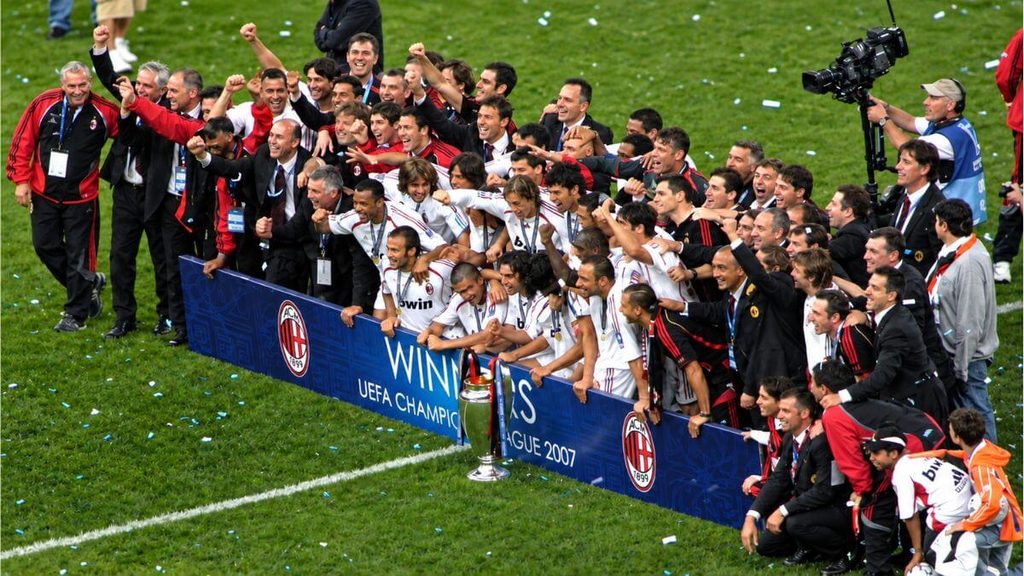
Kaká won the 2007 Ballon d’Or because his performances helped turn AC Milan’s European campaign into a Champions League triumph. The Brazilian attacking midfielder scored 10 goals in 13 Champions League appearances during the 2006–07 season, finished as the competition’s top scorer and played a decisive role in the knockout rounds.
But the award was more than recognition for a single outstanding season. It marked the peak of a journey that began at São Paulo, developed within one of Europe’s strongest teams and eventually carried Kaká to Real Madrid and Major League Soccer.
Understanding that journey explains why 2007 remains the defining year of his career.
Kaká’s Career: The Milestones Behind His 2007 Success
| Year | Career milestone | Why it matters |
|---|---|---|
| 2001 | Begins his senior career at São Paulo | Establishes the Brazilian foundation of his professional career |
| 2002 | Member of Brazil’s World Cup-winning squad | Gains international recognition early in his career |
| 2003 | Joins AC Milan | Begins the European chapter that transforms his career |
| 2004 | Wins Serie A with Milan | Establishes himself in a championship-winning team |
| 2006–07 | Scores 10 Champions League goals in 13 appearances | Finishes as the competition’s leading scorer |
| 2007 | Wins the Champions League and Ballon d’Or | Reaches the defining peak of his individual career |
| 2009 | Transfers to Real Madrid | Begins a new chapter in Spanish football |
| 2013 | Returns to AC Milan | Reconnects with the club most closely associated with his success |
| 2015–17 | Represents Orlando City in MLS | Becomes a leading figure in the club’s early MLS years |
| 2017 | Announces his retirement | Closes a professional career spanning Brazil, Europe and the United States |
The dates alone do not explain Kaká’s success. The more revealing story is how his technical ability, rapid movement and attacking intelligence became particularly influential in Milan’s European football.
From São Paulo to Milan: How Kaká Became an Elite Player
Long before the Ballon d’Or ceremony in Paris, Kaká had established himself as a promising young footballer at São Paulo.
His performances in Brazil attracted European interest, and in August 2003, AC Milan completed his transfer.
The move placed him inside an experienced team coached by Carlo Ancelotti, alongside established players including Andrea Pirlo, Clarence Seedorf, Paolo Maldini and Andriy Shevchenko.
Kaká was joining a club that had already won the Champions League in 2003. He was not being asked to build a winning team from nothing. Instead, he had the opportunity to develop within a side that understood how to compete for major trophies.
That distinction matters.
Individual talent can attract attention, but playing successfully in a demanding tactical environment requires a different level of maturity.
Kaká adapted quickly.
In October 2003, he scored his first Serie A goal in the Milan derby against Inter. By the end of the 2003–04 campaign, he had helped Milan win the Italian league title.
His contribution demonstrated something that would become increasingly important: he could combine creativity with the ability to turn attacking opportunities into goals.
Why Kaká’s Playing Style Made Him So Difficult to Defend
Kaká was an attacking midfielder, but his influence extended beyond conventional playmaking.
His most recognizable quality was the ability to carry the ball forward at speed while maintaining close control. He could receive possession between midfield and defence, accelerate into space and turn an ordinary transition into a dangerous attack.
He also possessed the finishing ability to punish opponents who gave him space around the penalty area.
For defenders, the challenge was not only stopping his passes. Kaká could become the attacking runner himself.
At Milan, that quality complemented a midfield capable of controlling possession and supplying the ball into advanced areas.
His effectiveness was especially clear when matches became stretched and there was space to attack behind an opponent’s midfield.
The 2006–07 Champions League campaign provided some of the strongest evidence of that combination.
The 2006–07 Champions League: The Season That Changed Everything
Milan’s route to the 2007 final was not built around one extraordinary match. Kaká repeatedly made important contributions as the competition progressed.
Anderlecht: An Early Warning
On November 1, 2006, Kaká scored a hat-trick in Milan’s 4–1 Champions League victory over Anderlecht.
The performance demonstrated that he was more than a midfielder who created opportunities for others.
He could also deliver the finishing contribution himself.
Celtic: The Goal That Kept Milan Moving
On March 7, 2007, Milan faced Celtic in the second leg of their Champions League round-of-16 tie.
After a goalless first leg and 90 minutes without a goal at San Siro, the contest entered extra time.
Kaká broke the deadlock in the 93rd minute with a powerful run and finish.
The 1–0 victory sent Milan into the quarter-finals.
That moment captured the difference between impressive individual statistics and decisive match-winning performances. With Milan struggling to find a breakthrough, Kaká produced the goal that settled the tie.
Manchester United: Kaká’s Defining European Performance
The semi-final against Manchester United became one of the most memorable chapters of his career.
On April 24, 2007, Milan lost the first leg 3–2 at Old Trafford. Kaká scored both of Milan’s goals, including a remarkable second goal involving a run through the United defence before he finished past Edwin van der Sar.
Milan still had work to do in the return leg.
At San Siro, Kaká scored again as the Italian side won 3–0, securing a 5–3 aggregate victory and a place in the final.
The two matches revealed the scale of his influence.
Kaká did not simply shine when Milan controlled a game. His goals were central to overcoming one of the strongest opponents on the route to the trophy.
Athens: The Final Against Liverpool
On May 23, 2007, Milan faced Liverpool in the Champions League final in Athens.
The match carried particular significance because Liverpool had defeated Milan in the dramatic 2005 final.
This time, Milan won 2–1.
Filippo Inzaghi scored both goals, while Kaká supplied the through ball for Inzaghi’s second.
Kaká did not score in the final. That detail is important because the value of his performance should not be exaggerated.
His decisive influence had already been established throughout the competition, and he still contributed directly to the winning goal.
According to UEFA’s official 2006–07 goalscoring report, Kaká finished with 10 goals in 13 appearances. The next-highest scorers recorded six each.
The margin helps explain why his individual campaign attracted so much recognition.
Why Kaká Won the 2007 Ballon d’Or
The central argument for Kaká’s 2007 Ballon d’Or was the combination of elite individual performance and collective success.
His Champions League campaign offered a particularly compelling case.
He finished as the tournament’s leading scorer, produced decisive goals against Celtic and Manchester United, and helped Milan win the European title.
On December 2, 2007, Kaká received the Ballon d’Or, finishing ahead of Cristiano Ronaldo and Lionel Messi.
It was a defining moment in a period when those two emerging stars would soon become central figures in football’s individual-award history.
Kaká’s recognition also continued beyond the Ballon d’Or.
He had already been named UEFA Club Footballer of the Year, and on December 17, he received the FIFA World Player of the Year award.
These honours belonged to the same exceptional calendar year, but they should not be treated as interchangeable awards.
Nor should every trophy won by Milan in December be described as a cause of the earlier Ballon d’Or result.
On December 16, Milan defeated Boca Juniors 4–2 to win the FIFA Club World Cup, with Kaká scoring and providing two assists.
That victory reinforced the remarkable nature of his year, but it happened after the Ballon d’Or had already been awarded.
The sequence matters because it distinguishes evidence explaining an award from achievements that later strengthened a player’s historical legacy.
For a broader account of the key matches, AC Milan’s retrospective on Kaká’s Ballon d’Or season documents his performances against Anderlecht, Celtic, Manchester United and Liverpool.
Real Madrid: A New Chapter After the Milan Peak
In June 2009, Kaká left Milan for Real Madrid.
The transfer represented a major change in his career. He was moving from the club where he had achieved his greatest individual recognition to another institution with enormous sporting expectations.
At Madrid, he joined an attacking group that included Cristiano Ronaldo and Karim Benzema.
His four-season period in Spain brought major trophies, including La Liga, the Copa del Rey and the Spanish Super Cup.
However, his Madrid career did not reproduce the same defining individual European campaign that had made 2007 so memorable.
That does not mean those seasons should be dismissed as a failure.
Football careers develop within changing teams, tactical systems and physical circumstances. Without separating those factors carefully, it would be misleading to reduce Kaká’s Madrid years to a single explanation.
The more balanced interpretation is that he remained a decorated footballer, while his most influential individual performances at the highest European level remained closely associated with Milan.
Real Madrid’s official Kaká profile records his years with the club and the domestic titles he won.
The Return to Milan and His Final Years in Orlando
In 2013, Kaká returned to AC Milan.
For supporters, the reunion brought back a player whose number 22 shirt had become closely associated with one of the club’s great modern European campaigns.
The return was not a repeat of 2007. Kaká was at a different stage of his career, and Milan was no longer the same team that had won the Champions League in Athens.
His journey later continued in Major League Soccer with Orlando City.
Kaká became the club’s first Designated Player and helped lead Orlando into its inaugural MLS season in 2015.
His presence provided the young club with an internationally recognizable figure who had competed at the highest levels of European and international football.
He announced his retirement on December 17, 2017, bringing an end to a career that had taken him from São Paulo to Milan, Madrid and Orlando.
What Made Kaká’s Success Distinctive?
Kaká’s career is often remembered through the Ballon d’Or, but the trophy is most meaningful when placed within the wider story.
His rise combined three important elements.
First, he developed the technical ability and composure needed to succeed at an elite European club.
Second, he found a role at Milan that allowed his particular strengths—acceleration, control, attacking movement and finishing—to influence major matches.
Third, his finest performances arrived during a campaign in which individual contribution and team achievement reinforced each other.
The result was a season with a clear competitive record rather than a reputation built solely on admiration for his playing style.
That is the strongest explanation for the lasting importance of 2007.
Kaká’s achievements before and after that year remain important, but the Milan Champions League campaign provides the clearest evidence of his peak.
Frequently Asked Questions About Kaká
1. Why did Kaká win the 2007 Ballon d’Or?
Kaká won the 2007 Ballon d’Or following an outstanding year with AC Milan, highlighted by winning the UEFA Champions League. He scored 10 goals in 13 Champions League appearances during the 2006–07 season, finished as the competition’s top scorer and produced decisive performances in the knockout rounds. He received the award on December 2, 2007.
2. How many Champions League goals did Kaká score in 2006–07?
Kaká scored 10 goals in 13 UEFA Champions League appearances during the 2006–07 season. He finished as the competition’s leading scorer, four goals ahead of the players tied for second place. Those figures refer specifically to the Champions League, not to every competition in Milan’s season.
3. Did Kaká win the World Cup with Brazil?
Yes. Kaká was a member of Brazil’s squad that won the 2002 FIFA World Cup in South Korea and Japan. He was a young member of the championship-winning squad, not one of its principal stars. His greatest individual club achievements came later, particularly during his years with AC Milan.
4. When did Kaká leave AC Milan for Real Madrid?
Kaká left AC Milan for Real Madrid in June 2009. He played for the Spanish club from 2009 to 2013, winning domestic honours including La Liga and the Copa del Rey. He returned to AC Milan in 2013.
5. When did Kaká retire from professional football?
Kaká announced his retirement on December 17, 2017, at the age of 35. His final professional club was Orlando City in Major League Soccer. Before moving to the United States, he had played for São Paulo, AC Milan and Real Madrid.
A Career Defined by More Than One Trophy
Kaká’s 2007 Ballon d’Or remains the clearest symbol of his success, but the achievement cannot be separated from the football that produced it.
His performances during Milan’s Champions League campaign demonstrated how an attacking midfielder could combine creativity, speed and goalscoring to influence football’s biggest matches.
His later career added different chapters rather than replacing that central achievement.
From São Paulo to San Siro, from Madrid to Orlando, Kaká built a career whose defining moment was supported by extraordinary performances on the pitch.
For readers interested in the achievements and careers of other influential public figures, explore Famousi’s Celebrity Net Worth & Success stories.