In This Article
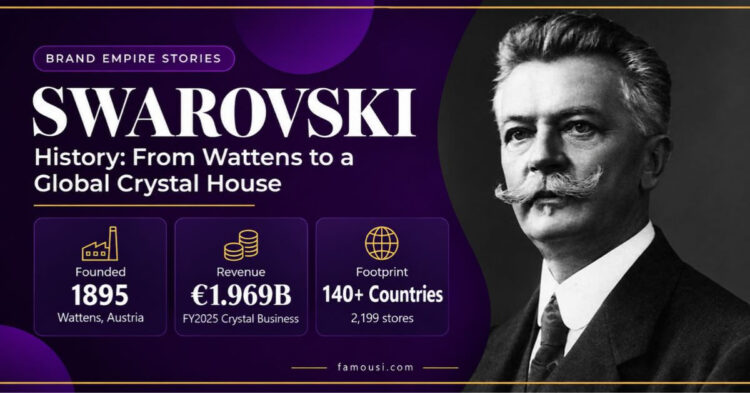
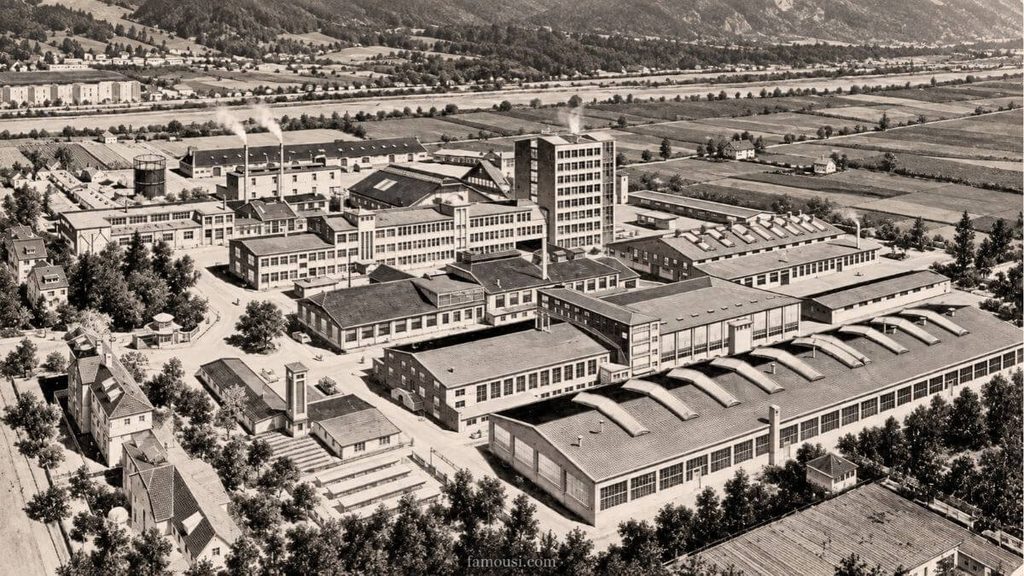
Swarovski history begins with a technical breakthrough, but the company’s endurance is better explained by what it repeatedly did with that expertise. Daniel Swarovski developed an electricity-powered approach to crystal cutting and applied for a patent in 1892; in 1895, he founded the company in Wattens with Franz Weis and Armand Kosmann. Wattens offered hydropower for the machinery, useful trade connections and distance from established competitors. Hall-Wattens’ history of Swarovski documents that early combination of invention, place and industrial strategy.
What followed was not a straight move from crystal factory to jewelry brand. Swarovski repeatedly translated the same core capability—precision cutting and the manipulation of light—into new contexts: couture components, decorative objects, consumer jewelry, immersive cultural experiences and, more recently, a more colorful luxury identity. That continuity through change is the thread that makes the company’s history more useful than a simple timeline.
Swarovski’s evolution at a glance
| Period | Turning point | What changed | Why it mattered |
|---|---|---|---|
| 1892–1895 | Cutting-machine patent and founding in Wattens | Daniel Swarovski moved crystal cutting toward electrically powered precision and established the company with Franz Weis and Armand Kosmann. | It joined technical innovation to a location where hydropower and European trade links could support production. |
| 1957 | Crystal entered a new couture language | Swarovski records Christian Dior using a light-reactive crystal effect in one of his final collections. | It illustrates how an industrial material could become a creative tool for high fashion rather than remaining only a component. |
| 1976–1989 | Figurines and jewelry moved Swarovski closer to the consumer | The first Swarovski figurine went on sale in 1976, its first jewelry line followed in 1977, and Daniel Swarovski Paris launched in 1989. | The Swarovski name increasingly appeared on finished objects and jewelry, not only on crystal supplied to other designers. |
| 1995 | Swarovski Crystal Worlds opened in Wattens | André Heller designed the attraction for Swarovski’s centenary. | Crystal became an experience and destination as well as a material and product. |
| 2021 | A new visual and retail language emerged | Swarovski’s timeline records a new Global Creative Director role, Instant Wonder stores, new brand colors and a streamlined Swan identity. | Heritage was reframed through a more expressive contemporary luxury environment. |
| 2025 | The Crystal Business operated at global scale | Swarovski reported €1.969 billion in revenue and a presence in more than 140 countries, with roughly 2,200 boutiques. | The current scale shows that the historic crystal capability now supports a global consumer and B2B business. |
Daniel Swarovski’s advantage began before the company existed
Daniel Swarovski grew up around glass cutting in Bohemia and became interested in the industrial possibilities of electricity. The decisive point was not simply that he knew how to cut crystal; it was that he looked for a way to make the process more precise and mechanized. The company’s own brand material still traces its heritage to a first patent in 1892 and the Austrian business established three years later. Swarovski’s official brand history connects that engineering origin directly to the company’s continuing emphasis on precision and light.
Wattens was part of the business model. The Tyrolean location supplied the water needed for hydropower, while transport connections helped link the business to European fashion markets. Hall-Wattens also records another strategic consideration: operating away from the Bohemian crystal industry reduced exposure to imitators. In other words, Swarovski’s origin was already a combination of product technology, energy, geography and access to customers—not simply craftsmanship in isolation.
Fashion gave crystal a language beyond the factory
Supplying a technically impressive material is different from giving that material cultural meaning. Fashion helped Swarovski make that transition.
The company’s current heritage material describes a long relationship with couture houses, and its official milestone record highlights Christian Dior’s use of a Swarovski crystal effect in 1957. That example matters because the crystal was no longer interesting only for how accurately it could be cut; designers could use its changing color and light as part of a visual idea.
This pattern—technical capability made more valuable by someone else’s creative interpretation—would recur throughout Swarovski’s history. It also explains why the brand could participate in fashion without abandoning the industrial knowledge that came first.
The crystal mouse signaled a different kind of Swarovski business
One of Swarovski’s most revealing milestones did not begin as a grand strategy. According to the company’s timeline, a Wattens factory technician assembled spare chandelier pieces into a crystal mouse. It was initially given to employees, then went on sale during the 1976 Winter Olympics in Innsbruck and became the first Swarovski figurine.
The importance of the mouse is not that one figurine single-handedly transformed the company. It is that the episode demonstrated another use for Swarovski crystal: the material itself could become the finished object a consumer wanted to own.
The next milestones made that consumer-facing direction clearer. Swarovski says its first jewelry line launched in 1977, followed in 1989 by the limited Daniel Swarovski Paris couture line. The company that had built its name by supplying crystal to other creative industries was increasingly putting its own name on jewelry and collectible design.
Crystal Worlds turned company heritage into a destination
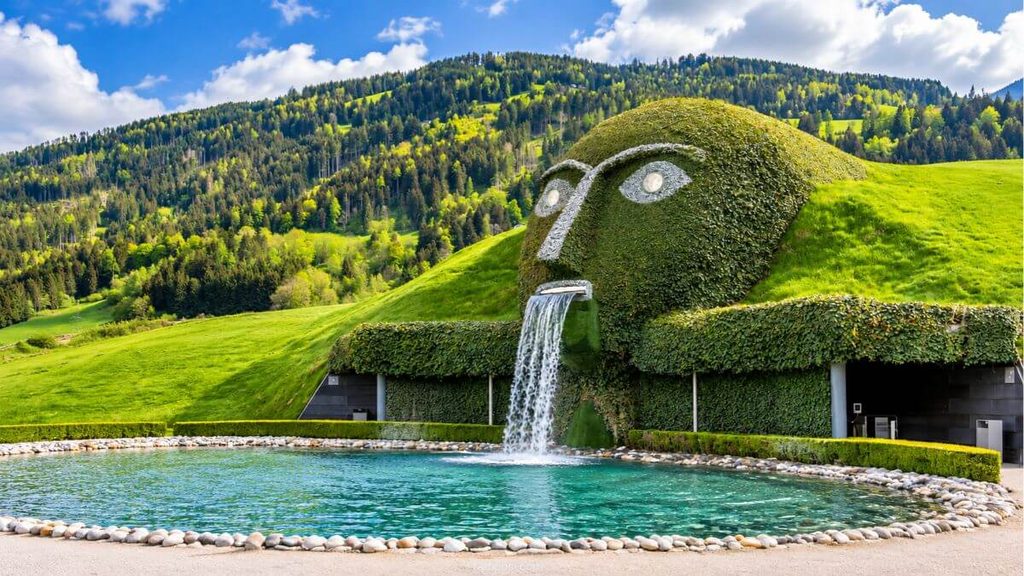
Swarovski made another unusual move for a crystal manufacturer in 1995. To mark its centenary, it opened Swarovski Crystal Worlds in Wattens, with multimedia artist André Heller creating the Giant and the imaginative environment behind it. Swarovski’s official milestones timeline describes the attraction as a continuing setting for artistic collaboration and different interpretations of crystal.
This was a different form of brand building. A visitor did not need to buy a necklace or know the technical details of crystal cutting to enter the Swarovski world. The material became architecture, installation, spectacle and tourism.
That shift also gave Wattens a second role in the story. It was no longer only the place selected for hydropower and manufacturing in the nineteenth century; it became a place where Swarovski could stage and interpret its own cultural identity.
A complete Swarovski history also has to include its difficult past
Heritage is less credible when only the celebratory parts survive. Swarovski now explicitly addresses the need for historical transparency on its own website. The company says the Swarovski family commissioned an Austrian economic historian to research Daniel Swarovski’s life from 1862 to 1956, granted unrestricted access to family archives and allowed the historian full autonomy; the resulting book was published by Böhlau in 2025. Swarovski’s statement on its historical research sets out that position directly.
A separate record from Austria’s Zukunftsfonds describes a 2025 historical study of the Swarovski company from 1895 to 1950 with particular focus on the National Socialist period, including family members’ political entanglements and the company’s economic transformation during the war. Austria’s Zukunftsfonds project record provides the scope of that research.
Those two records should not be treated as the same project, nor should a century of family and corporate history be collapsed into unsupported generalizations. What they do establish is that this period belongs in a serious account of Swarovski’s history rather than outside it.
The 2021 reset made heritage look deliberately modern
By the early 2020s, Swarovski was not trying to return to the visual language of 1895. It was trying to make its history usable inside a different luxury market.
Swarovski’s official timeline places a major creative and retail reset in 2021: a new Global Creative Director role, the global rollout of the Instant Wonder store concept, stronger use of brand colors and a streamlined Swan logo. The company’s current history page also explains that the Swan was enclosed within an octagonal crystal form, tying the newer identity back to cutting and facets.
The connection is subtle but important. The modern Swarovski environment is brighter, more colorful and more theatrical than the industrial workshop at the company’s origin, yet the octagon, light and crystal remain ways of making the old technical expertise visible.
That is a more coherent form of reinvention than simply adding unrelated products. The expression changes; the underlying material vocabulary remains recognizable.
Swarovski’s current scale shows how far that translation has traveled
The latest full-year figures add scale without needing to turn the history into a financial report. For fiscal 2025, the family-owned Swarovski Crystal Business reported €1.969 billion in revenue, up 6% organically from the previous year. The company said it operated in more than 140 countries, with roughly 2,200 boutiques and approximately 18,300 employees. Swarovski’s 2025 business results also identify Alexis Nasard as CEO and describe the business as operating under its LUXignite strategy and “Pop Luxury” positioning.
Those figures belong specifically to Swarovski Crystal Business; they should not be treated as standalone figures for every sister company in the wider Swarovski Group. The distinction matters because Swarovski Crystal Business sits alongside Swarovski Optik and Tyrolit within the group structure.
For a brand founded around a specialized industrial technique, the modern footprint is striking. But scale alone does not explain the brand. The more useful explanation is the repeated expansion of what crystal could mean: component, couture material, collectible, jewelry, cultural installation, retail world and contemporary luxury symbol.
Frequently Asked Questions
When was Swarovski founded, and who founded it?
Swarovski was founded in 1895 in Wattens, Austria, by Daniel Swarovski with Franz Weis and Armand Kosmann. Daniel’s crystal-cutting innovation preceded the company: local historical records place his patent application for the machine in 1892.
Why did Daniel Swarovski choose Wattens, Austria?
Wattens offered several practical advantages: abundant water for hydropower, access to European trade routes and distance from the crystal-cutting competition Daniel Swarovski had left in Bohemia. Those factors made the location useful both for running the machinery and protecting a developing industrial process.
What did Daniel Swarovski invent?
Daniel Swarovski developed an electricity-powered machine for cutting crystal with far greater precision than traditional manual methods. Swarovski traces its first patent to 1892, before the company itself was established in 1895.
How did Swarovski become a luxury jewelry brand?
Swarovski’s move into luxury jewelry happened gradually rather than through one event. Its crystal expertise entered couture through relationships with fashion designers; the company then expanded into consumer collectibles, launched its first jewelry line in 1977, introduced Daniel Swarovski Paris in 1989, built Crystal Worlds in 1995 and later reshaped its stores and visual identity around a more contemporary luxury position. These milestones show a widening of the brand’s role, but they should not be interpreted as proof that any single launch caused its later commercial success.
Who owns Swarovski today?
Swarovski Crystal Business remains family-owned. A 2026 company statement says Swarovski is owned by family shareholders from the fourth, fifth and sixth generations, while Alexis Nasard is the current CEO of Swarovski Crystal Business. Public evidence used here does not establish a simple individual ownership percentage, so the safer description is family-owned rather than assigning unsourced stakes to particular relatives.
Why Swarovski’s history still matters
Swarovski’s longevity is easier to understand when the story is viewed as adaptation around one unusually durable competence. Precision cutting created the starting point, but the company repeatedly found new ways for crystal to matter: as a fashion material, a collectible object, jewelry, a cultural environment and a modern luxury code.
That makes Swarovski different from a heritage brand that survives mainly by preserving old symbols. Its strongest continuity is a process—turning light, precision and crystal into forms that make sense to a new audience. Readers interested in how other heritage houses convert old strengths into new brand language can compare Famousi’s Bulgari history and Fendi history.