In This Article
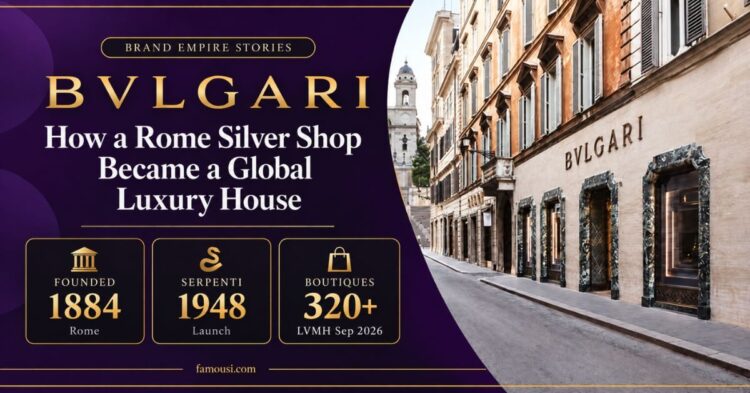
Bulgari began in Rome in 1884 as a small jewelry business built around the skills of Greek silversmith Sotirio Bulgari. More than 140 years later, it operates on a global scale as part of LVMH, with jewelry, watches, fragrances, accessories and hospitality all carrying the Bvlgari name.
The more revealing part of Bulgari history is what connects those two realities. The house repeatedly turned pieces of its origin—Rome, architecture, color, craftsmanship and recognizable forms—into design codes that could survive new generations, new categories and a change in ownership.
According to Bvlgari’s official account of its 1884 origins, Sotirio Bulgari opened his first Rome boutique at Via Sistina 85, selling silver ornaments alongside precious objects and antiques. That modest starting point eventually became the foundation for one of Italy’s most recognizable luxury houses.
Bulgari’s Key Turning Points
| Year | Bulgari milestone | Why it matters |
|---|---|---|
| 1884 | Sotirio Bulgari opens his first boutique at Via Sistina 85 in Rome. | Establishes the house’s Greek silversmithing roots and its connection to Rome. |
| 1905–1920s | A larger Via dei Condotti store opens in 1905; by the early 1920s, the business is expanding into sophisticated jewelry and watches. | Marks the move from the original silver-focused assortment toward high jewelry. |
| 1930s | The house introduces the “BVLGARI” spelling with a V inspired by ancient Roman inscriptions. | Turns Rome from a location into a visible part of the brand identity. |
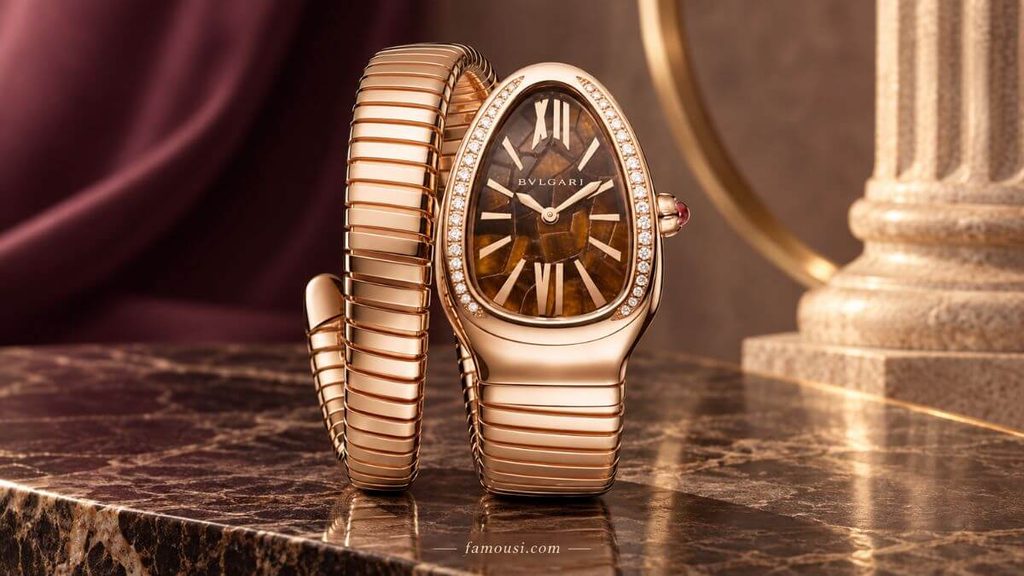
| 1948 | The first Serpenti bracelet-watches appear, combining a spiraling Tubogas band with a watch dial. | Creates a design language that can be continually reinterpreted. |
| 2004 | Bulgari opens its first hotel in Milan. | Extends the name from luxury objects into hospitality. |
| 2011 | Bulgari joins LVMH through a combination involving the Bulgari family’s controlling stake and a subsequent tender process. | Changes the corporate structure behind the house while preserving Bulgari as a distinct Maison. |
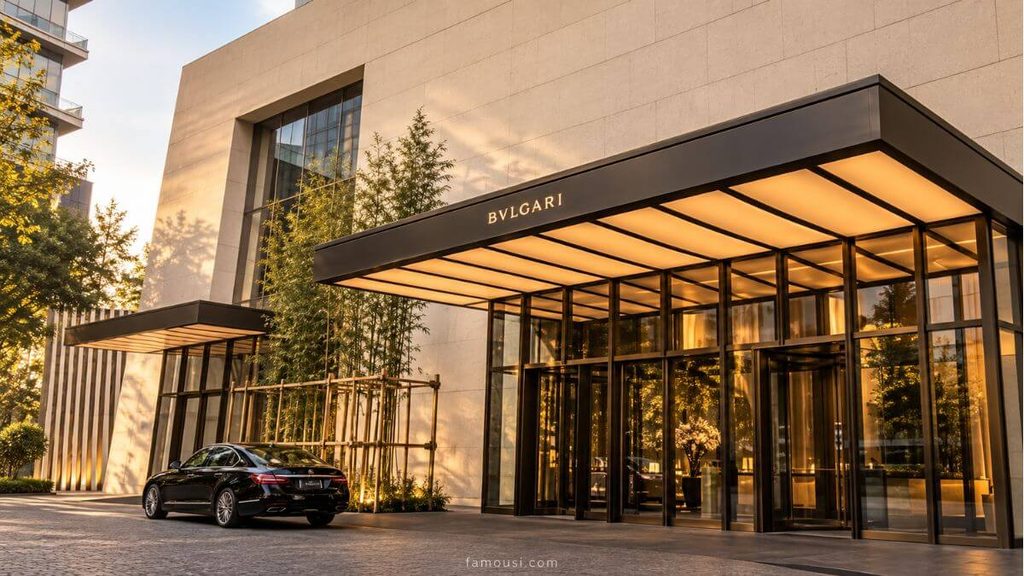
| September 2026 access | LVMH lists more than 320 Bulgari boutiques, more than 6,000 employees and six production sites. | Shows the scale reached by a business that began with one Rome boutique. |
Bulgari Began With Silver, Not High Jewelry
Sotirio Bulgari was born into a silversmithing tradition in Greece before establishing himself in Rome. At 27, he combined that craft background with what Bvlgari describes as the artistic and cultural character of the Italian capital.
The first Via Sistina boutique therefore looked very different from the Bulgari most people recognize today. It offered silver ornaments made by Sotirio as well as precious and antique objects.
That distinction matters because the company did not begin with a ready-made formula for a global luxury house. Its identity accumulated gradually.
Bvlgari records that the early business also reached tourists and expanded into other destinations during its first years. The important strategic pattern was already visible: Rome remained the center, but the business was learning how to present its craftsmanship to an international clientele.
Via Condotti Changed the Scale of the Ambition
A major step came in 1905 with a larger store at Via dei Condotti 10.
Bvlgari’s official history of the 1920s transition says the shop was initially called “Old Curiosity Shop,” a name intended to appeal to British and American visitors. By the early 1920s, under Sotirio’s sons Giorgio and Costantino, the assortment had expanded toward watches and increasingly sophisticated jewelry.
This is one of the most important transitions in Bulgari history because the company was no longer defined only by the founder’s original silver work.
It was moving toward the higher end of the jewelry market while still drawing on the craft knowledge that gave the business its starting point.
The shift was not instantaneous. Bvlgari’s own history notes that French jewelry codes still influenced its work during the 1920s. The distinctive Bulgari identity associated with later decades was still developing.
Rome Became More Than Bulgari’s Address
The 1930s made the connection between Bulgari and Rome much more explicit.
According to Bvlgari’s history of the 1930s, the familiar “BVLGARI” logo was introduced during this period, using a V in place of U in reference to ancient Roman inscriptions.
That small typographic decision did something important: it made the house’s Roman identity visible every time the name appeared.
Rome was no longer simply where Bulgari happened to operate. It became part of the brand language.
The relationship remains visible today. Bvlgari describes the Spanish Steps as a physical connection between Via Sistina, where Sotirio opened his first shop, and the Via dei Condotti store that became associated with the house’s later identity. The company also funded a restoration of the Spanish Steps announced in 2014.
The broader lesson is that heritage becomes more useful when it can be translated into something recognizable rather than left as background history.
A similar mechanism appears in Famousi’s story of how Prada turned nylon into a reusable luxury code. The materials and visual language are completely different, but both stories show how one identifiable idea can help a luxury house evolve without becoming visually anonymous.
Serpenti Turned a Technique Into a Lasting Design Code
The most recognizable example of that process arrived in 1948.
Bvlgari’s official history of the 1940s dates the first Serpenti bracelet-watches to that year. The early pieces combined a spiraling band made using the Tubogas technique with a geometric watch dial.
Tubogas itself drew on the appearance of industrial tubing. Gold strips were wrapped around a core to create a flexible structure without soldering.
The important point for Bulgari’s longer story is not simply that Serpenti became a successful product family.
A snake is a form that can change dramatically while remaining identifiable. It can become a watch, a bracelet or another jewelry expression without requiring the house to abandon the visual idea that connects the pieces.
That gives a brand more freedom than a single fixed product ever could.
The original 1948 Serpenti should not be confused with every later Serpenti creation. Materials, proportions and designs have continued to change. What endured was the recognizable language of the serpent and the flexible bracelet form that helped establish it.
Bulgari Expanded the Idea of What the Maison Could Be
By the beginning of the 2000s, Bulgari was extending its name beyond jewelry and watches.
The company’s official history of the 2000s records the opening of the first Bulgari hotel in Milan in 2004. A Bulgari Hotels document gives the exact opening date as May 18, 2004 and describes it as the Bulgari Group’s entry into hospitality.
This was a larger strategic leap than simply launching another product line.
A jewel can carry Bulgari through its materials, shape and craftsmanship. A hotel has to translate the same luxury identity into architecture, interiors, service and the experience of an entire place.
That made hospitality a test of whether the house’s identity could work without depending on a piece of jewelry being the central object.
The expansion also helps explain why Bulgari today is better understood as a luxury Maison with several forms of expression rather than only as a jeweler.
The 2011 LVMH Deal Changed Ownership, Not Bulgari’s Origin Story
Another major turning point came in 2011.
LVMH’s transaction record for Bulgari documents the combination between the two groups. As part of the transaction, shares representing 55.03% of Bulgari’s issued capital were contributed to LVMH, followed by a mandatory tender offer process.
Today, Bvlgari is one of LVMH’s Watches & Jewelry Maisons.
The ownership distinction is important because corporate scale and brand identity are not the same thing.
Bulgari gained a different corporate structure, but LVMH’s own current presentation still emphasizes the house’s Roman character and describes its identity through its relationship with Rome, color, materials and Mediterranean culture.
That continuity helps prevent the 2011 transaction from becoming the entire explanation for Bulgari’s present position.
The design language, Via Condotti, Serpenti and the Roman identity all existed long before the LVMH deal. The acquisition changed the company behind the Maison; it did not create the heritage that the Maison continues to use.
How Big Is Bulgari Today?
The most useful public figures are current footprint measures rather than attempts to infer Bulgari revenue from LVMH group or segment numbers.
As accessed in September 2026, LVMH’s current Bvlgari Maison page lists:
- More than 320 boutiques worldwide
- More than 6,000 employees
- Six production sites
These are LVMH-published figures displayed without a separate reporting period, so they are best treated as figures visible on the company’s website in September 2026 rather than permanent counts.
LVMH also names Serpenti, B.zero1, Octo, Diva’s Dream and Bvlgari Bvlgari among the house’s icons, illustrating how the present business now rests on several recognizable design families rather than a single product.
What Bulgari’s History Actually Shows
Bulgari’s development is sometimes reduced to a simple luxury-growth story: a craftsman starts a shop, the shop becomes famous, and global expansion follows.
The documented timeline is more useful than that.
First, the house built a recognizable relationship with a specific place. Rome eventually became visible in the typography, architecture and self-description of the Maison.
Second, Bulgari created design ideas that could be reused rather than exhausted. Serpenti is the clearest example: the forms can change substantially while remaining recognizable as part of the same family.
Third, the brand expanded into new forms of luxury without completely replacing its earlier identity. Hospitality is the clearest test because it asks the Bulgari name to work at the scale of an environment rather than an object.
That pattern is also visible in other enduring brands. Famousi’s history of Ray-Ban from Aviators to AI glasses shows a different industry using the same broad principle: strong visual codes can make major changes feel evolutionary rather than disconnected.
For Bulgari, the result is a house whose historical value does not depend on freezing the company in its original form.
Its silver-shop origin, Roman identity, Serpenti design language and later global expansion belong to different periods, but they remain connected enough for the modern brand to be recognizable as an extension of the same story.
Frequently Asked Questions
Who founded Bulgari and when?
Sotirio Bulgari founded the business in Rome in 1884. Bvlgari’s official history says the Greek silversmith opened his first boutique at Via Sistina 85, where he sold silver ornaments alongside precious objects and antiques.
Why is Bulgari spelled BVLGARI?
BVLGARI uses a V instead of U as a reference to ancient Roman inscriptions. Bvlgari says this visual identity was introduced during the 1930s as the Via dei Condotti boutique and the house’s Roman identity were being developed.
When was Bulgari Serpenti introduced?
Bvlgari dates the first Serpenti bracelet-watches to 1948. Those early pieces combined a spiraling Tubogas bracelet with a geometric watch dial. Later Serpenti designs evolved considerably, so modern pieces should not be presented as identical to the 1948 originals.
Who owns Bulgari today?
Bulgari is part of LVMH. The combination took place in 2011 through a transaction involving the Bulgari family’s shareholding and a subsequent mandatory tender offer. LVMH continues to list Bvlgari among its Watches & Jewelry Maisons.
How large is Bulgari today?
As accessed in September 2026, LVMH’s Bvlgari page lists more than 320 boutiques, more than 6,000 employees and six production sites. Because the page does not provide a separate reporting period for those counters, they should be read as company-published figures visible at the September 2026 access date.
Why Bulgari’s History Still Matters
Bulgari did not become globally recognizable by leaving its origin behind.
The stronger pattern is almost the opposite: the house repeatedly found ways to reuse parts of that origin at a larger scale.
Via Sistina established the craft business. Via Condotti helped move it toward high jewelry. The BVLGARI name made Rome visible in the identity. Serpenti created a form capable of continuous reinterpretation. Hospitality showed that the brand could expand beyond objects, while the 2011 LVMH transaction gave the company a new ownership structure without erasing the heritage that preceded it.
That continuity is what makes Bulgari’s history more than a timeline of luxury products. It is a story of how a small Rome silver shop developed a set of ideas strong enough to survive expansion, reinvention and more than a century of change.