In This Article
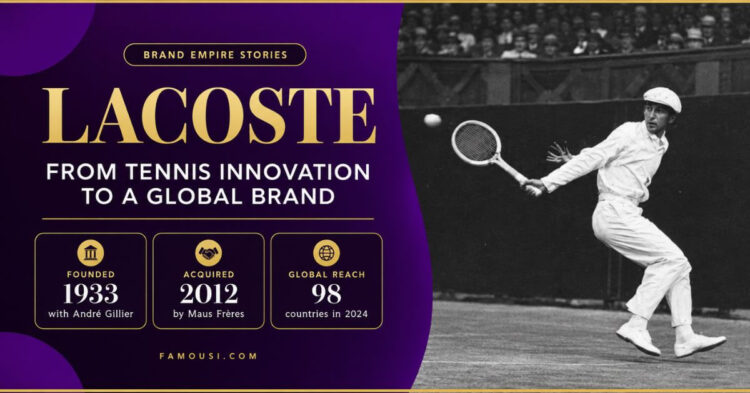
Lacoste’s history begins before Lacoste existed. In 1923, tennis player Rene Lacoste acquired the nickname “the Crocodile” after a Boston match story involving a promised crocodile-skin suitcase. Ten years later, he and knitwear manufacturer Andre Gillier founded the company around a lighter, short-sleeved tennis shirt designed to give players more freedom of movement.
The deeper reason the brand endured is what happened next: the athlete, the crocodile and the polo became a set of recognizable codes that could travel far beyond tennis. That pattern is still visible in 2026, when Lacoste’s new visual identity returned to archival typography, historic greens, Rene Lacoste’s handwriting and the early work of crocodile illustrator Robert George instead of inventing an unrelated new identity.
Lacoste’s Brand-Building Timeline
| Period | What changed | Primary entity / relationship | Why it mattered | Evidence qualification |
| 1923 | The “Crocodile” nickname links Rene Lacoste to a personal symbol before the company exists. | Rene Lacoste / Robert George | A personal identity becomes the seed of a future visual code. | Lacoste history + INA archive |
| 1933 | Lacoste is founded and a flexible, lightweight short-sleeved tennis shirt moves from court solution to commercial product. | Rene Lacoste + Andre Gillier | Performance innovation becomes a repeatable brand proposition. | Lacoste corporate history |
| 1950s | Lacoste clothing begins to be exported internationally. | Lacoste | The same core identity starts moving across markets rather than remaining a French tennis story. | Decade-level official history |
| 2012 | Maus Freres fully acquires Lacoste. | Maus Freres / Lacoste | Ownership changes while the brand continues to operate around inherited Lacoste codes. | MF Brands records the full acquisition |
| 2024 | Lacoste reports presence in 98 countries and 1,100 stores. | Lacoste | The dated footprint shows how far the original brand system had scaled. | Lacoste 2024 key figures |
| 2026 | A refreshed visual identity returns to Rene Lacoste, Robert George and archival brand elements. | Lacoste | Heritage remains active design material, not only a historical reference. | April 2026 official release |
The Lacoste Story Started With a Person Before It Became a Brand
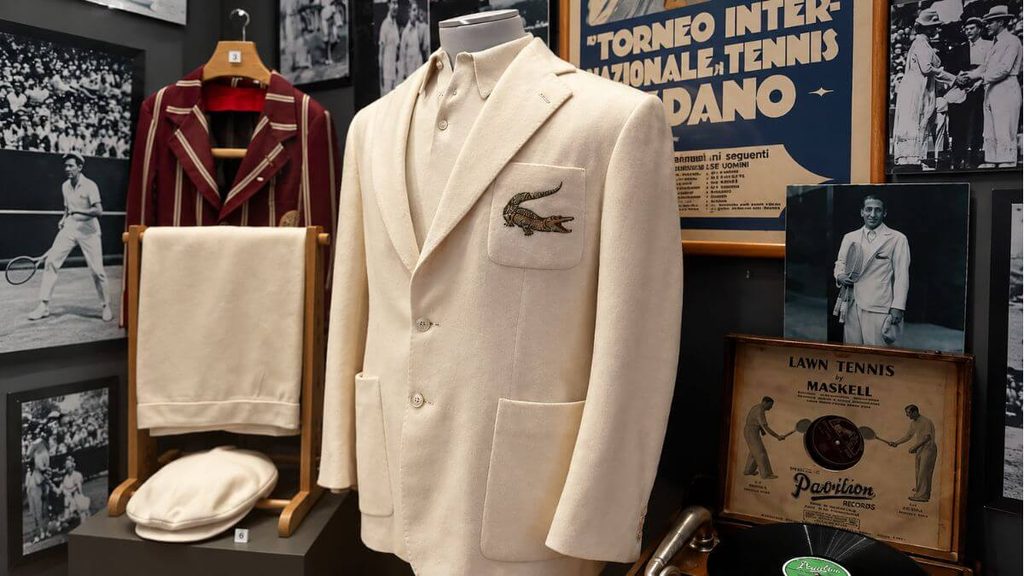
The crocodile was first a nickname, not a marketing invention. Lacoste’s corporate history says the story began in Boston in 1923, when his team captain promised Rene Lacoste a crocodile-leather suitcase if he won his next match. Lacoste lost, but the American press connected his persistence on court with the crocodile. The nickname stuck, and Lacoste later asked his friend Robert George to turn the animal into a motif worn on his jackets.
The broad outline is not only a company legend. INA’s archival account of Rene Lacoste also traces the nickname to a 1923 Boston match and notes that it became inseparable from the player. That distinction matters because the symbol carried meaning before it carried a product: tenacity came first, branding later.
The 1933 Polo Turned a Tennis Problem Into a Product System
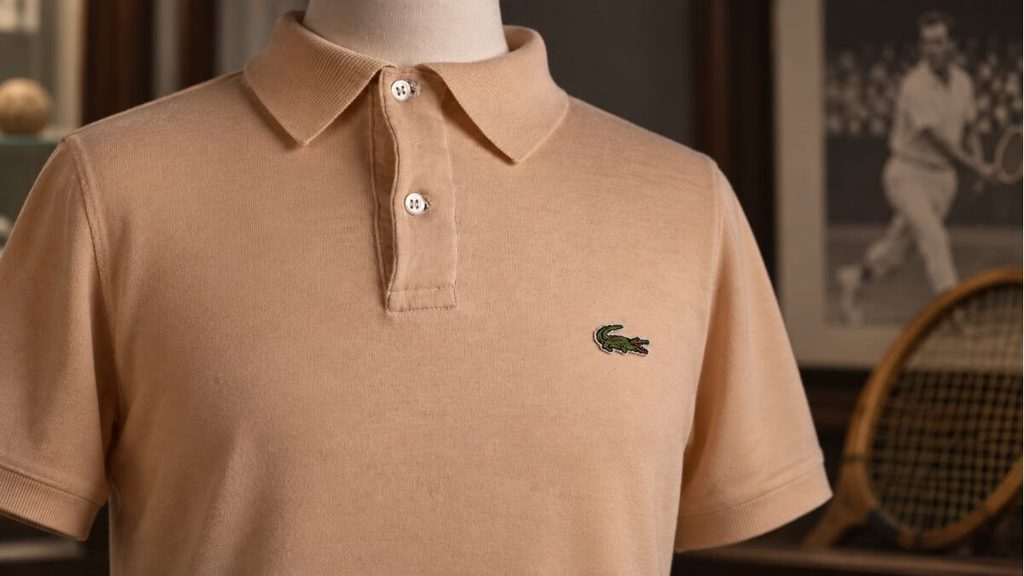
By 1933, Lacoste’s identity had a product capable of carrying it. The company’s history describes a flexible, lightweight shirt in petit pique cotton that rejected the more restrictive long-sleeved tennis clothing of the era. The same year, Rene Lacoste founded the company with Andre Gillier, bringing together the athlete’s practical problem-solving and an established knitwear manufacturing partner.
The L.12.12 name shows how deliberately the product was codified. According to Lacoste’s official L.12.12 history, L stands for Lacoste, 1 for petit pique, 2 for two short sleeves, and 12 for the number of prototypes realized. What looks like a simple model number therefore preserves the product’s experimental origin inside the name itself.
That combination – function, a serial identity and a visible emblem – gave Lacoste more than one successful garment. It created a product language that could be recognized and repeated without requiring the founder to explain the original tennis problem every time.
The Crocodile Made the Product Recognizable Without Explaining It
Lacoste’s own history makes the strongest possible claim about the logo, calling the company the first brand to place a logo on clothing. A more careful historical formulation comes from Sophie Lemahieu, curator at the Musee des Arts Decoratifs in Paris. In a Lacoste museum interview, she describes Lacoste as one of the first brands to put its logo on the chest.
That qualified wording is more useful than a superlative. The important point is not whether Lacoste can claim an absolute first; it is that the crocodile became part of the garment itself at a time when visible sports branding was still emerging. A small emblem could identify the maker, connect the product to Rene Lacoste’s story and remain recognizable even as the shirt moved from sport into everyday wear.
That is a familiar pattern in durable fashion brands: a material or symbol becomes powerful when it can be reused without losing recognition. Famousi’s account of how Prada turned nylon into a reusable luxury code shows a different route to the same strategic advantage. Lacoste’s version was the combination of a crocodile, a polo silhouette and a performance story.
Expansion Worked Because the Same Codes Could Travel
During the 1950s, Lacoste says its clothing began to be exported across the world. The milestone matters less as a geographic brag than as a test of portability: could an identity born in French tennis still make sense when the wearer had no connection to Rene Lacoste’s original matches? The answer, over time, was yes.
The brand later expanded into many categories, but listing every fragrance, accessory or collaboration would obscure the stronger point. The crocodile and the polo gave Lacoste a stable center while the surrounding business could broaden. Expansion did not require the company to abandon the visual and functional cues that made it recognizable in the first place.
The 2012 Acquisition Changed Ownership, Not the Brand’s Origin Story
Corporate ownership changed in 2012. MF Brands records that Maus Freres fully acquired Lacoste after already holding 35% of the company through its Devanlay subsidiary. Lacoste remains part of the MF Brands portfolio.
For the Lacoste story, the distinction between ownership and origin is important. Maus Freres did not found the brand and should not replace Rene Lacoste and Andre Gillier in the founding narrative. The 2012 transaction explains who sits behind the company today, while the brand’s core historical codes still come from the earlier tennis, product and crocodile story.
Lacoste’s 2024 Footprint Shows How Far the Original System Traveled
Lacoste’s own 2024 key figures report operations in 98 countries and 1,100 stores. Those numbers should be read as dated company-reported footprint metrics, not as timeless current counts, but they give scale to the transformation from one player’s court problem into a global fashion-sport business.
The figures do not prove cultural influence by themselves, and they do not explain every reason customers buy the brand. What they do establish is reach. By 2024, Lacoste had built a distribution footprint large enough for its founding symbols to operate across markets, generations and contexts far removed from 1930s tennis.
The 2026 Identity Refresh Shows the Heritage Is Still Working
The most revealing evidence about Lacoste’s history may be how actively the company still uses it. In April 2026, Lacoste refreshed its visual identity by drawing on early Rene Lacoste creations, Robert George’s crocodile work, archival serif typography, historic green tones and the founder’s handwritten script. The company was not simply commemorating an anniversary; it was using old material to structure new brand expression.
The same archival logic appeared on the runway. Lacoste’s Fall-Winter 2026 show was inspired by a rain-interrupted Davis Cup match Rene Lacoste played on July 31, 1923, turning that episode into a contemporary collection built around weather, performance and memory. A reasonable interpretation is that the archive functions as design infrastructure: the brand can revisit a person, match, color, emblem or garment and translate it into something new without severing the connection to its origin.
That does not mean every heritage brand succeeds by looking backward. It means recognizable codes can create room to change. Famousi’s Ray-Ban history from Aviators to AI glasses shows a related pattern in another category: heritage can remain useful when it gives innovation a familiar shape rather than forcing every new idea to begin from zero.
Frequently Asked Questions
Who founded Lacoste?
Rene Lacoste and Andre Gillier founded Lacoste in 1933. Rene brought the tennis experience, product idea and crocodile identity; Gillier was a knitwear manufacturer whose industrial expertise helped turn the sportswear concept into a commercial brand.
Why is the Lacoste logo a crocodile?
The crocodile comes from Rene Lacoste’s tennis nickname. The story dates to a 1923 Boston match and a bet involving a crocodile-skin suitcase; American press coverage linked Lacoste’s tenacity to the animal. His friend Robert George later developed the crocodile motif that Lacoste wore on his clothing, turning the nickname into a visual emblem.
What does L.12.12 mean on a Lacoste polo?
L.12.12 is Lacoste’s product code for the original polo line: L means Lacoste, 1 refers to petit pique, 2 refers to two short sleeves, and 12 records the number of prototypes realized. Lacoste’s own product history ties the model to Rene Lacoste’s 1933 invention.
Who owns Lacoste today?
Lacoste is owned within the Maus Freres / MF Brands group. MF Brands records that Maus Freres fully acquired Lacoste in 2012 after already holding a 35% stake through Devanlay, and Lacoste remains one of the group’s portfolio brands.
How big is Lacoste today?
In its 2024 key figures, Lacoste reported a presence in 98 countries and 1,100 stores, alongside 8,200 employees and 43 online shops. Those are company-reported 2024 figures, so they should not be treated as undated 2026 counts without a newer equivalent disclosure.
Why Lacoste’s History Still Matters
Lacoste’s history is compelling because the brand did not begin with an abstract lifestyle promise. It began with a player, a problem, a nickname and a garment. Those elements became durable codes that could survive changes in geography, ownership, category and fashion while remaining recognizably connected to Rene Lacoste.
The 2026 return to archival drawings, handwriting and match history makes the pattern unusually clear. Lacoste is not simply preserving its past; it is repeatedly selecting parts of that past that can still do work in the present. That ability to change without making the brand unrecognizable is the strongest supported explanation for why a tennis innovation from the 1930s still has strategic value nearly a century later.